A full shift at the salon chair is eight, nine, sometimes ten hours on your feet. You're standing at the same station, leaning over clients, reaching for color, stepping through clippings and spills on hard floors. Your shoes carry all of that, every single day.
If you have bunions or wide feet, the wrong pair turns a long day into a painful one. A narrow toe box presses on the joint, stitching catches where the bunion sits, and by mid-afternoon you're thinking about your feet, not your client.
We make every pair in our range for women with bunions and wide feet, handmade in Portugal by master shoemakers, with extra width and volume in the toe box and a standard fit at the heel. The picks below are ranked for salon work: all-day cushioning on hard floors, uppers that handle dye and product, and forefoot room for bunions.
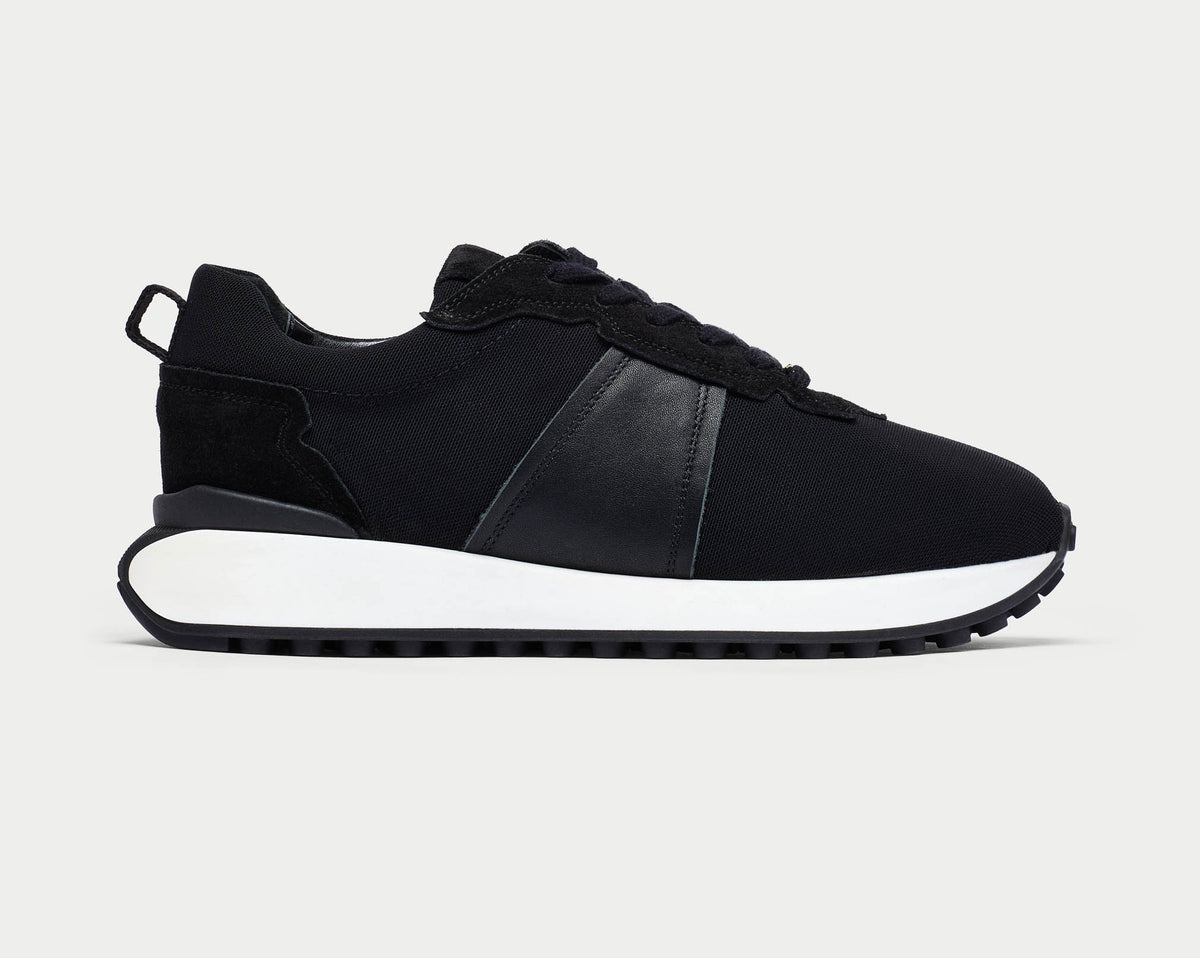
The Cosmos is the chunky trainer Calla's founder built because the dad-trainer trend kept squeezing her bunions, and black is the wear-with-everything one. A chunky cushioned outsole adds height, while the wider, deeper toe box and removable insole give the forefoot room and take your orthotics. Fits EE-EEE, true to size.
Origin
Handcrafted in Portugal at a family-run factory in the Porto region
Material
Black leather upper with textile side detail, lamb leather lining
Heel
Flat with chunky outsole
Closure
Lace-up
Fit
Wide fit, EE and EEE width feet, standard fit around the heel with additional width and depth in the toe box
Insole
Removable moulded footbed with arch support, swap for own orthotics
Browse more images of the Cosmos - Chunky-Sole Black Wide Fit Sneakers:
Our Review
Black is the Cosmos I reach for most, because a chunky trainer usually crushes my forefoot and this one was designed by someone with bunions to do the opposite. The wider, deeper toe box means my bunion has room inside a sporty shape, and the insole lifts out for my orthotics. The chunky outsole gives me a bit of height and a lot of cushioning on hard pavements without any forefoot pressure. In black it goes with jeans, joggers or a midi without a thought. True to size in a wide fit, EE-EEE.
Pros
Chunky outsole gives lift and stride length without putting pitch through the forefoot
Removable footbed accepts the wearer's own orthotics
EEE width cap with extra toe-box depth accommodates wider forefeet and Morton's neuroma
Lace-up closure adjusts across the instep
Cons
Chunky-sole silhouette is heavier on the foot than a standard trainer profile
Leather upper needs conditioning to keep the side panels looking fresh
Sporty trainer styling means it will not slot into smart workwear or occasion outfits
The Star trainer in black quilted leather, the quilting adding a padded diamond texture to a plain black sneaker. A fully lined seam-free toe box gives the bunion a smooth surface, while lace-ups open the forefoot to an EEE. Fits EE-EEE, true to size.
Origin
Handcrafted in Portugal at a family-run factory in the Porto region
Material
Quilted black leather upper, lamb leather lining
Heel
Flat
Colour
Black
Fit
Wide fit, fits EE-EEE width feet
Toe box
Wider toe box with extra depth, fully lined with no internal seams, standard fit around the heel
Browse more images of the Star - Black Quilted Leather Wide Fit Sneakers:
Our Review
I reach for the quilted black Star when plain black feels a bit flat, because the padded diamond stitching gives the shoe some surface interest while still going with everything. The toe box is fully lined with no inner seams, so there's nothing catching on my bunion through a day of walking, and the laces let me loosen the forefoot when my foot widens later on. It keeps the standard Calla heel, so it stays secure at the back while giving my toes room at the front. I wear it with jeans or black trousers without thinking about it. True to size, EE-EEE.
Pros
Quilted leather surface adds visual texture to the standard black trainer
Removable moulded footbed accepts your own orthotic
Seam-free interior toe box reduces rubbing on the bunion joint
EE-EEE width range with laces to fine-tune the forefoot
Cons
Fit stops at EEE so EEEE width feet will not fit
Quilted stitching adds surface points that can catch on bags or trouser hems
The Estella is Calla's zip-up trainer with no laces to tie, and black leather is the smart everyday one. A side zip means easy on and off without bending, while the removable moulded footbed and wider fit give the bunion room and take your orthotics. Fits up to EEE, true to size.
Origin
Handcrafted in Portugal, designed in the UK
Material
Black leather upper, lamb leather lining
Heel
Flat
Width cap
Fits up to EEE width feet
Toe box
Wide toe box
Closure
Side zip instead of laces
Footbed
Removable moulded footbed, swap in your own orthotics
Press
Voted one of the best stylish trainers for wide feet by Hello, Good Housekeeping, The Independent, The London Evening Standard
Browse more images of the Estella - Black Leather Zip-Up Wide Fit Sneakers:
Our Review
The black Estella is the trainer I reach for when I don't want to bend down and tie laces, because the side zip means I step straight in and out. In black leather it looks tidy enough for a casual office or smart-casual day, not just the gym. The wider fit and moulded footbed give my bunion room, and the footbed lifts out for my orthotics. The zip also means a consistent fit every time rather than laces I retie. True to size, up to EEE.
Pros
Side zip means you slip the trainer on without retying laces
Removable moulded footbed for own orthotics
EEE width fitting accommodates wider feet than most trainer brands
Black leather hides scuffs and city-pavement marks better than white
Cons
Zip is a moving part that adds a wear point lace-ups do not have
No laces means no further width adjustment beyond the fixed zip line
All-black trainer reads more formal than casual so it suits office and smart-casual wear more than sport
The Ophelia is Calla's classic brogue in a mix of smooth black leather and soft suede, with the brogue detailing across the toe. A hidden stretch panel in the toe box gives the bunion room and flexibility, on an EEE toe width. Fits up to EEE, true to size.
Origin
Handcrafted in Portugal at a family-run factory in the Porto region, designed in the UK
Material
Smooth black leather and soft suede upper, lamb leather lining
Heel
Flat
Fit
True to size
Width cap
Fits up to EEE toe width
Toe box
Wide Calla last with hidden stretch panel in the toe box
Browse more images of the Ophelia - Black Leather Brogues:
Our Review
Black Ophelia is the brogue I reach for when I want a smart flat that goes with everything, since the leather-and-suede mix and the brogue detailing look polished with trousers or jeans. The hidden stretch panel in the toe box gives over my bunion so the brogue doesn't press the joint. The shape leaves extra room and flexibility through the forefoot. It is the flat I wear most through autumn and winter. Fits up to EEE, true to size.
Pros
Hidden stretch panel in the toe box flexes over the bunion joint
EEE width cap accommodates wider forefeet
Mixed leather and suede upper takes both office and weekend outfits
Flat heel suits all-day standing and walking
Cons
Suede panels need weatherproofing before wet-weather wear
Black suede shows salt marks in winter
Lace-up entry takes longer to put on than a slip-on flat
The Meredith chunky loafer in neutral leather with a gold horsebit detail, the day-to-night one. A 2.5cm heel and cushioned sole carry the day, while the wide-enough toe box gives the bunion room. Fits up to EE, true to size.
Browse more images of the Meredith - Neutral Leather Loafers:
Our Review
Neutral leather is the Meredith I wear when I want a loafer that goes from day to evening, since the soft neutral and the gold horsebit give it just enough polish for dinner. The 2.5cm heel and cushioned sole keep me comfortable from morning on, and the toe box is wide enough that my bunion has room. The horsebit lifts plain trousers without trying too hard. It wipes clean more easily than the suedes. Fits up to EE, true to size.
Pros
2.5cm heel sits low enough for full-day wear
Gold horsebit detail across the vamp
Cushioned arch-supported insole
Lamb leather lining flexes over the bunion area
Cons
Width cap stops at EE
Neutral leather will show scuffs and needs a conditioning cream to keep the colour even
Horsebit detail rules out the most formal black-tie settings
The Charlotte is Calla's crossover ballet flat, the one customers keep coming back to, here in soft black nappa leather. The leather crosses over the toes and stretches across the bunion, with a panel that gives both bunions and tailor's bunions room. Fits up to EEE, true to size.
Origin
Handcrafted in Portugal at a family-run factory in the Porto region
Material
Soft black nappa leather upper, lamb leather lining
Heel
Flat ballerina
Colour
Black
Fit
True to size, fits up to EEE width feet
Toe box
Stretch panel across the toe box for bunions and tailor's bunions, crossover design that stretches to the foot shape
Footbed
Enhanced arch support, extra cushioning at the heel
Browse more images of the Charlotte - Black Leather Ballet Flats:
Our Review
Black Charlotte is the ballet flat I reach for most, because the crossover design stretches gently over my bunion instead of pressing a hard line across the joint. The soft nappa leather gives where my foot is widest, and the stretch panel handles both my bunion and the tailor's bunion on the little-toe side. Enhanced arch support and extra heel cushioning mean it carries a full day rather than leaving my feet flat and sore. It is the flat I'd recommend to anyone after a bunionectomy who needs softness and width over the scar area. Fits up to EEE, true to size.
Pros
Stretch panel across the toe box gives over both the bunion and the tailor's bunion sides
Nappa leather softens with wear
Extra heel cushioning eases the back of the foot
Fits up to EEE width
Cons
Flat ballerina sole has limited grip in wet weather
Crossover stretch design relies on the panel rather than laces so cannot be tightened
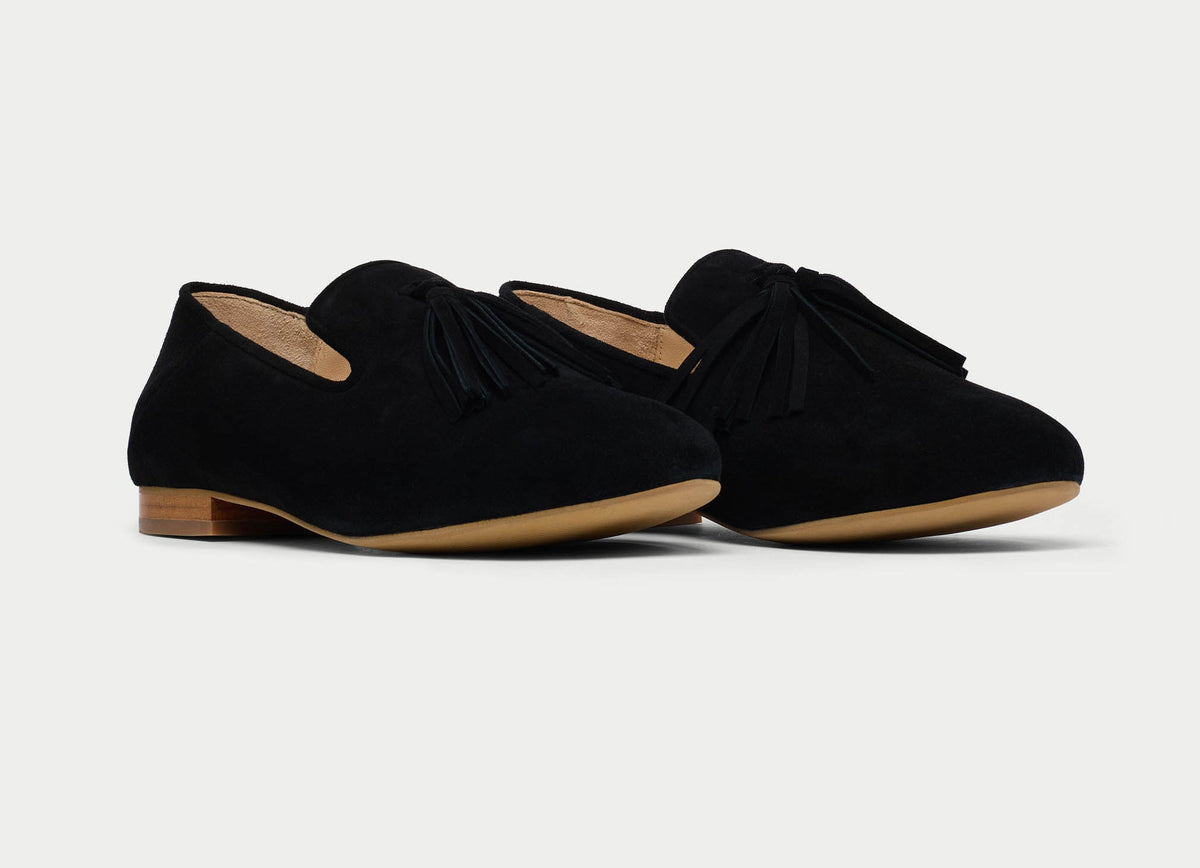
The Nadia is Calla's sleek, minimalist loafer with no hardware to interrupt the line, and black leather is the clean everyday one. A 2.5cm heel and bunion-stretch lining give a slight lift with room over the joint, while arch support carries the day. Fits up to EE, true to size.
Origin
Handcrafted in Portugal at a family-run factory in the Porto region
Browse more images of the Nadia - Black Leather Loafers:
Our Review
Black Nadia is the loafer I wear when I want something pared back, since the clean minimalist shape with no buckles or tassels keeps it quiet under tailoring. The 2.5cm heel gives a small lift, and the stretch lining flexes over my bunion so the joint isn't pressed. The built-in arch support is what lets me wear it through a full day rather than just a couple of hours. It goes with everything from a suit to jeans. Fits up to EE, true to size.
Pros
2.5 cm heel gives a small lift without raising the forefoot
Slip-on loafer construction quick on and off
Lamb leather lining flexes over the bunion area
Black leather pairs with work and casual outfits
Cons
Width caps at EE so EEE feet will not fit
Slip-on cut relies on the topline grip rather than laces to hold the foot
Leather upper needs occasional conditioning to keep the finish
A clean white grain-leather trainer with a removable moulded footbed, so you can drop in your own orthotics, and a fully lined seam-free toe box that gives the bunion a smooth surface. Lace-ups let you open the forefoot towards an EEE width, and the cushioned arch-supported insole carries a full day of walking. True to size.
Origin
Handcrafted in Portugal at a family-run factory in the Porto region
Material
White grain leather upper, lamb leather lining
Heel
Flat
Colour
White
Fit
Fits EE-EEE width feet
Toe box
Wider toe box with extra depth, fully lined with no internal seams
Footbed
Removable moulded footbed with arch support
Closure
Lace-up for forefoot width adjustment
Press
Selected by Hello, Good Housekeeping, The Independent and The London Evening Standard among stylish trainers for wide feet
Browse more images of the Star - White Grain Leather Wide Fit Sneakers:
Our Review
The Star is the trainer I recommend to anyone who wears orthotics, because the moulded footbed lifts straight out and my own insole drops in, which almost no white fashion trainer lets me do. The toe box is fully lined with no internal seams, so nothing rubs across my bunion on a long walk, and I can loosen the laces to open the forefoot when the joint swells later in the day. It runs wide to an EEE but reads as an ordinary white sneaker, so it goes with jeans and a blazer or a shirt dress without looking like a comfort shoe. I have walked through whole city days in them without the forefoot ache I used to expect. True to size for me.
Pros
Grain texture on the leather hides minor scuffs better than smooth white leather
Removable moulded footbed lets you slot in your own orthotic
Seam-free toe box lining over the bunion area
Lace-up forefoot adjusts from EE to EEE
Cons
White leather still marks in wet or muddy conditions
Fit caps at EEE
Lace closure slower on and off than a slip-on
What a day on the salon floor asks of your shoes
On a salon shift, you need five things from your shoes: cushioning for static standing, grip on hard floors, closed toes, an upper that cleans up, and room in the forefoot if you have bunions.
Hairdressing is static standing, not walking. You're planted at the same station for hours, leaning forward over clients, twisting to reach the back of a head. The load pools in the heels and the balls of your feet rather than spreading as you move, so you need cushioning where the weight sits and support through the arch and midfoot to keep your foot stable.
Grip matters because the floor changes constantly. Clipped hair on hard tile acts like fine grit underfoot, and water and color near the basins make it slippery. The Health and Safety Executive lists wet floors and poor footwear among the leading causes of workplace slips.
Closed toes protect against dropped shears, stray clippings, hot tools and product splashes. And a smooth leather upper is the practical choice: dye, bleach and product wipe off leather where they soak into a mesh or knitted fabric, and stray clippings work into loosely woven material and poke.
Clogs and slip-ons are the traditional salon shoe, and they do make it easy to get your feet in and out. The trade-off is less support through the midfoot than a lace-up or a shoe with a secured back, and for an all-day shift that stability matters.
We've picked it because it's a good place to start for a salon floor: a chunky cushioned sole and a black leather and textile upper. The Cosmos's chunky sole cushions your feet on hard tile for hours, meets most salon dress codes in all-black, and the leather panels wipe down when dye or product lands on it. We moved the external stitching line forward, off the bunion, so nothing catches or rubs on the joint. You can't see the change from the outside, and that's the point: we'd rather your sneaker looked like any other you'd choose to wear, with the bunion out of sight. It fits W and WW and has a removable molded footbed with arch support. Take a look at the Calla Cosmos Black Sneaker.
A thick sole cushions the load of static standing.
Laces let you adjust the fit across the top of the foot, which matters if you have a bunion: you can ease the tension over the big-toe joint without loosening the rest of the shoe.
A removable molded footbed (the shaped insert inside the shoe) means you can take it out and use your own orthotics (supportive insoles shaped to your foot) if you need them.
The Calla Star leather sneaker fits up to a WW width across the forefoot and suits the same all-day salon work. The Star has a removable molded footbed and a fully lined, seam-free toe box, so there's nothing pressing on the bunion through a long shift. Because the footbed comes out, you can use an orthotic from your podiatrist in its place. It comes in black leather as well as several other colorways.
A lot of salons require all-black footwear as part of the dress code, and it's a practical choice as much as a uniform one. Black hides dye splashes, color stains and everyday scuffs, so your shoes still look presentable weeks into a busy salon schedule.
All-black doesn't lock you into one style. It comes in sneakers, loafers, ballet flats and brogues, so you can match the level of formality your salon expects without losing the comfort your feet need.
Not every salon lets you wear sneakers to the chair. In an upscale or client-facing salon, the expectation is a polished shoe, and the usual fear is that polished means painful over a full standing shift.
A flat leather loafer or brogue with a wide toe box and a cushioned footbed looks smart, holds up to hours of standing, and gives your toes room.
Dina Gohil, a podiatrist registered with the HCPC, knows the other side of this: patients turn down the footwear she recommends because it looks hideous.
A good example for a salon with an all-black dress code is the Calla Ophelia Black Leather Brogue.
We've picked it because it's polished enough for the salon where a sneaker looks too casual, and it gives you room across the forefoot, fitting up to WW across the toe. It has a hidden stretch panel in the toe box, a soft stretch lining and a smart mix of black leather and suede. Have a look at the Calla Ophelia Black Leather Brogue.
If your salon doesn't insist on black, the Calla Meredith Neutral Leather Loafer is a flat with a wide, roomy toe box and a chunky low heel for stability at the chair. IndyBest at The Independent (a UK newspaper) named the Meredith 'Best smart orthopaedic shoe' on 2 September 2026, with the reviewer noting its secret stretch panel that helps accommodate bunions.
Two things tend to happen to your feet across a full standing shift: they swell, and the ball of your foot takes more and more of the load. A good pair of shoes eases both, but neither can be solved by footwear alone. If your pain is severe or isn't settling, see your podiatrist.
Feet that swell by the end of the day
Your feet swell across a standing day, and the pair that felt comfortable at eight in the morning can feel tight by three in the afternoon. The UK's NHS notes that swelling in the feet and ankles is common after long periods of standing, and it's a common reason shoes that fitted in the morning don't fit properly by the end of a shift. The same NHS guidance advises getting urgent help the same day (in the US, from your doctor or an urgent care clinic) if the swelling is in one foot or leg and you don't know why, if the area is red or hot to the touch, or if it's severe, painful or starts very suddenly, and calling 911 if you're short of breath or your chest feels tight or painful.
Buy for your feet as they are in the afternoon, not the morning. Try shoes on late in the day, or at least after you've been on your feet for a few hours, so you're sizing for the foot that actually has to survive the shift. A bit of give in the upper helps, and laces or a zip that let you open the fit as your feet expand make a real difference.
A good example is the Calla Estella Black Leather Zip-Up Sneaker.
We've picked it because it has a zip closure instead of laces, so it opens right up and you can get in and out at the start and end of a long shift without a fight. The Estella fits up to a WW width across the forefoot, with a leather upper that softens and gives a little over time, a synthetic stretch lining and a removable molded footbed, so you can use your own orthotics. Take a look at the Calla Estella Black Leather Zip-Up Sneaker.
A burning or numb feeling under the ball of your foot, sometimes described as standing on a pebble, is common in jobs that keep you on hard floors for hours. The UK's NHS notes that Morton's neuroma (a thickening of the tissue around a nerve between the toe joints in the ball of the foot) can cause exactly this kind of burning and numbness, and narrow, tight shoes are one of the things that aggravate it. Hours of static standing load the forefoot further, and a tight toe box concentrates that pressure across the joints. More room across the ball of the foot and cushioning underneath it take some of that pressure off.
If the pain is sharp, doesn't settle when you rest, or keeps coming back, get it looked at by a podiatrist.
Standing on hard floors for hours can also bring on plantar fasciitis (inflammation of the band of tissue that runs along the sole of your foot, from the heel to the toes). The UK's NHS recommends shoes with cushioned heels and good arch support, and advises against high heels, tight pointy shoes, flip-flops and backless slippers. If that kind of heel or arch pain sounds familiar, our guide to shoes for plantar fasciitis covers it in more detail.
Getting shoes that fit all-day feet
Whether a shoe survives a full shift comes down to two things: the room it gives your toes, and the right size. A shoe can be the right length and still squeeze your toes, or wide enough across the front but half a size too long, so your foot slides forward and your toes jam into the taper.
Room for wide feet and bunions
If you have bunions or wide feet, you need extra width across the toe box and softer material over the joint. No shoe reverses or corrects a bunion. The UK's NHS is clear that you cannot get rid of bunions without surgery. The American College of Foot and Ankle Surgeons notes that shoes which crowd the toes can make a bunion worse over time. And Ron McCulloch, a podiatric surgeon (a surgeon who specializes in the foot) featured on our site, says the best you can hope for is to slow the progression and to limit the worsening. His advice in our interview with him: wear good shoes with a round toe and a relatively low heel. What roomy, well-fitting shoes do is take the pressure off the joint and avoid adding to it.
The trouble with generic wide-width shoes, the kind that are wide all the way round, is that your heel slips. Your foot slides forward and your toes jam into the front of the shoe, and you're back to square one.
We build every pair wide across the toe box and standard at the heel. We call it the Calla Comfort Method.
As foot surgeon Mr David Gordon puts it in our Q&A, the challenge is finding extra room 'in the right place without having a shoe that's unnecessarily loose everywhere else.'
On many styles, a hidden stretch panel flexes over the joint, and a soft lining means there are no hard seams pressing against the sensitive skin around the bunion.
If your feet are wide all the way round, not just across the toes, our forefoot-wide width may not be the right one for you.
Measure your feet at the end of the day, when they're at their largest, and measure both. A lot of women wear the wrong shoe size, and that can be because they measured in the morning, measured only one foot, or haven't measured at all since their feet last changed. A 2018 review by Buldt and Menz in the Journal of Foot and Ankle Research found that 63 to 72 percent of participants in the studies it covered were wearing shoes that didn't fit their feet in width or length, and in one study half of women wore shoes more than 5mm (about 0.2 inches) too narrow, compared with a third of men.
Stand up, put your weight through both feet, and measure from the longest toe to the back of the heel for length. For width, measure right around the widest part of your foot, at the bunion if you have one, while standing. That widest point is what a shoe width is measured from.
Color, bleach and styling product are going to land on your shoes in a salon, and smooth leather handles that better than anything else. A splash on leather sits on the surface long enough to blot it off. On fabric or mesh, it soaks in.
Act quickly when something lands. Blot, don't rub, and use a leather-appropriate cleaner rather than whatever's nearest to the basin. A leather protector applied before you start wearing them gives you a bit of a buffer, though it won't make them stain-proof.
Leather also outlasts fabric in a salon, which matters when your shoes are an investment rather than a throwaway pair. All our leather comes from Leather Working Group certified suppliers, and the shoes are handmade in Portugal in a factory independently audited to the Sedex SMETA standard (Labour Standards and Health & Safety) in 2026. And when the soles or heels wear through before the upper does, a cobbler can bring them back. We offer a professional repair and resell service, carried out by experienced cobblers, so a well-made pair lasts for years rather than months.
As a hairstylist, you need a cushioned, supportive, closed-toe shoe that meets your salon's dress code. The Calla Cosmos sneaker, with its chunky cushioned sole and black leather and textile upper, is a good place to start: it handles hard tile floors all day, the leather panels wipe clean, and there's room in the forefoot for bunions and wide feet. If your salon expects something smarter, the Calla Ophelia Black Leather Brogue works at the chair without looking too casual. And if you have bunions, look for a wide toe box with a standard-width heel, so the shoe gives your bunion room.
Why do hairstylists always wear black?
Many salons set all-black as the uniform rule, and it's a practical one. Black hides dye, color splashes and scuffs far better than any other shade, so your shoes still look presentable after a full week on the salon floor. All-black doesn't mean uncomfortable: sneakers, loafers, flats and brogues all come in black with the same cushioning and forefoot room.
What should you not wear as a hairstylist?
You should not wear open-toe shoes, insecure backless slip-ons, anything with a worn-smooth sole, and thin unsupported flats. Open toes leave your feet exposed to dropped shears, stray clippings, hot tools and salon chemicals. A smooth sole on wet tile covered in hair clippings is a slip risk: the Health and Safety Executive lists poor footwear among the leading causes of workplace slips and trips. And a flat with no cushioning or arch support will have your feet aching well before the shift ends.




Leave a comment
This site is protected by hCaptcha and the hCaptcha Privacy Policy and Terms of Service apply.