Everyday shoes cause the most grief when you have bunions.
Not heels for a wedding, not sandals on vacation. The pair you put on six mornings a week to walk to work, do the school run, or stand through a shift.
When the toe box pinches across the big toe joint and the seam falls right on the bunion, every step is a reminder. And you take thousands of steps in your everyday shoes.
You need:
width and depth at the forefoot, where the bunion actually is, not a shoe that's wider all the way round.
a soft upper that stretches over the joint instead of pressing into it.
a secure heel, because if a shoe is too loose at the back, your foot slides forward into the tapered front as you walk.
Shoes like these won't treat or correct the bunion, but they take the pressure and friction off the joint, so you're comfortable on your feet all day.
Here are the everyday walking shoes we recommend for bunions:
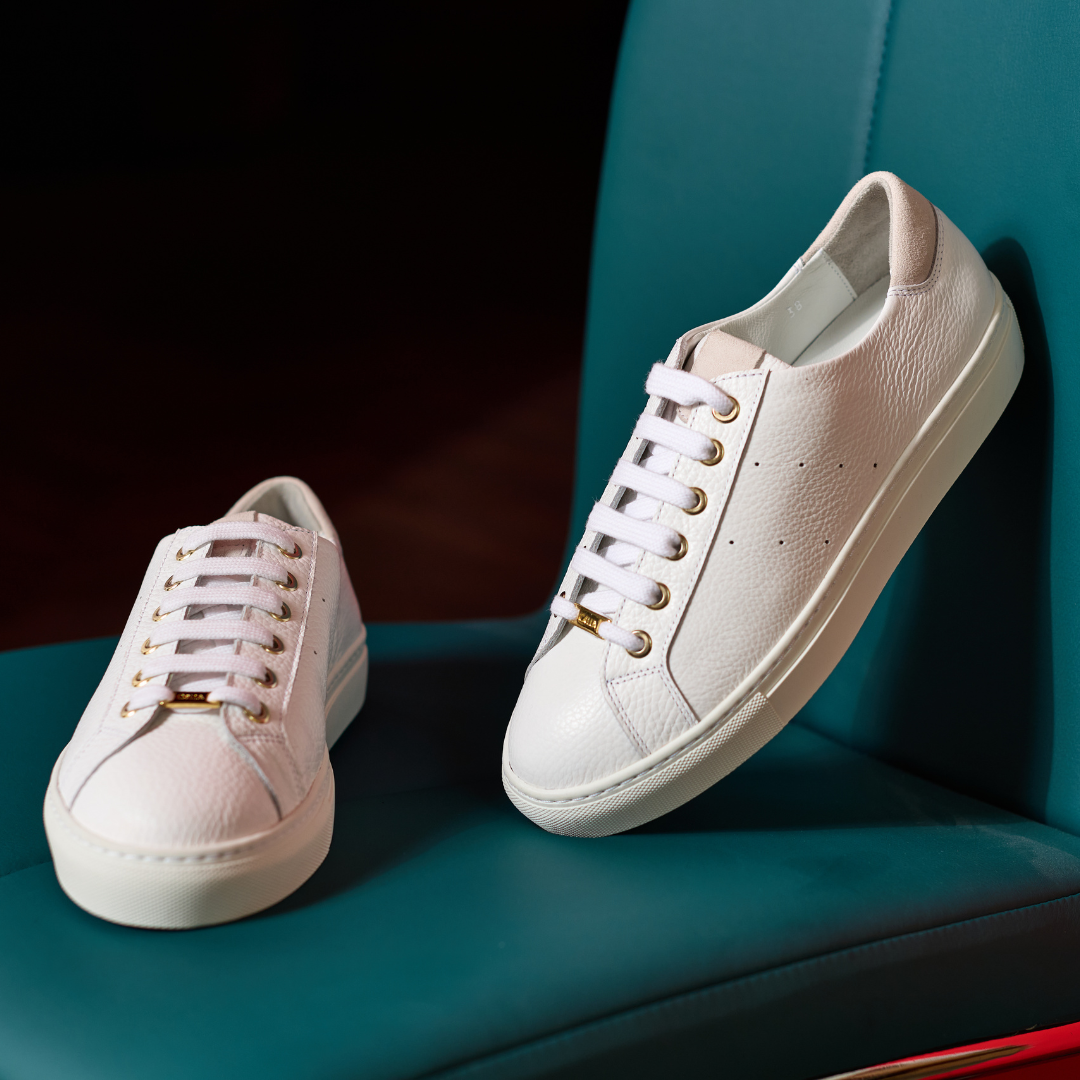
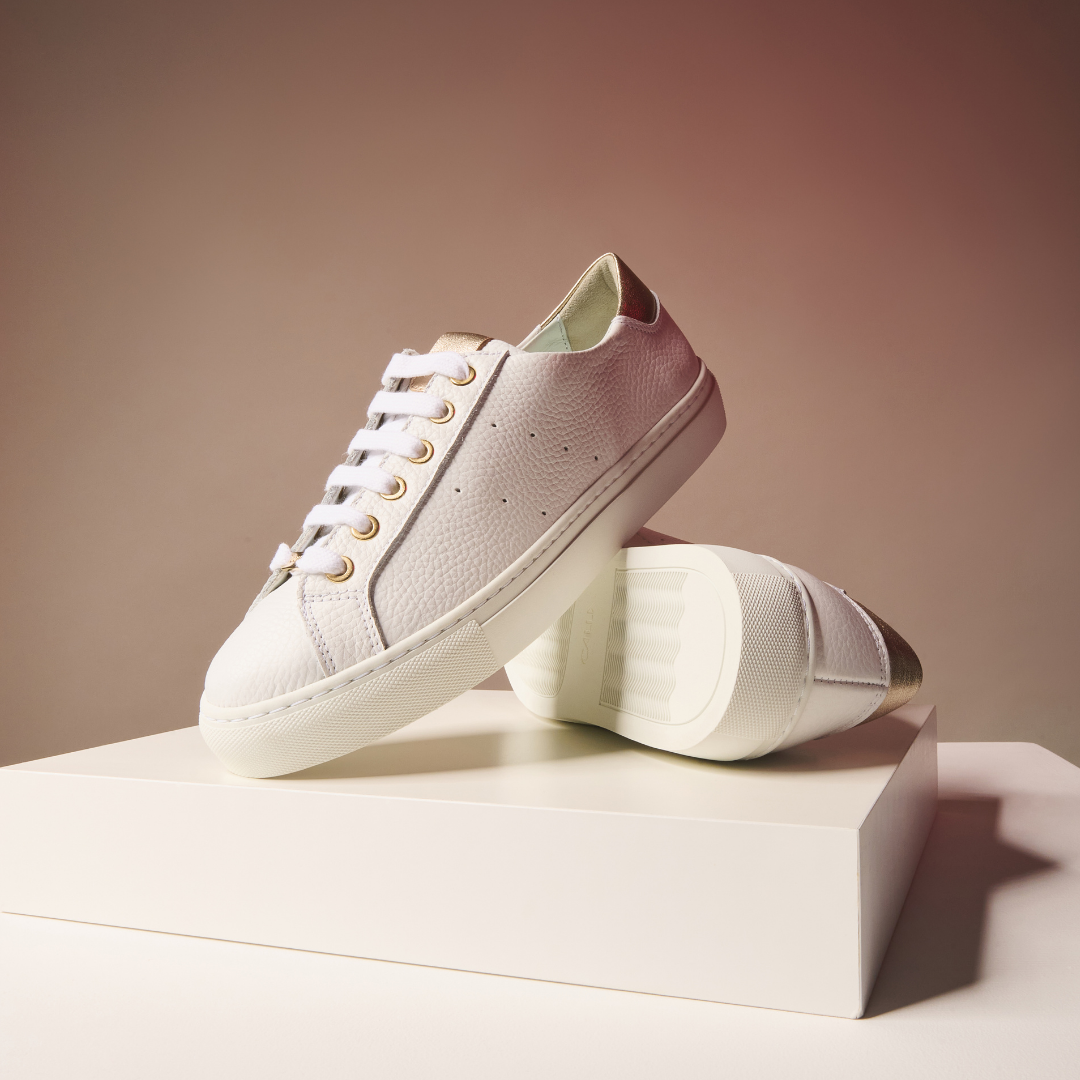
The Star trainer in smooth white leather with grey crackle accents, a cooler-toned white that leans smart and sits as well with tailoring as denim. The wider toe box gives the bunion room and the footbed lifts out for your own orthotics. Fits EE-EEE, true to size.
Origin
Handcrafted in Portugal at a family-run factory in the Porto region, designed in the UK with foot technologists
Material
Smooth white leather upper with grey crackle accents, lamb leather lining
Heel
Flat
Width cap
Fits up to EEE width
Toe box
Wider toe box, fully lined with no seams
Closure
Lace-ups so you can adjust forefoot width
Footbed
Removable moulded footbed so you can use your own orthotics, arch-supported cushioned insole
Designed for
Bunions, wide feet, hammer toes, hallux rigidus
Press
Featured by Hello, Good Housekeeping, The Independent and The London Evening Standard
Browse more images of the Star - White & Grey Leather Wide Width Sneakers:
Our Review
The white and grey Star is the one I wear when I want a trainer that looks considered with tailored trousers, since the grey crackle accents read cooler and smarter than a warm champagne. It is the same comfortable build, with a wider toe box that gives my bunion room and a footbed that lifts out for my orthotics. The grey accents also hide marks at the toe better than an all-white. I wear it with cropped trousers and a knit, or straight jeans and a blazer. True to size in a wide fit, EE-EEE.
Pros
Lace-ups let you adjust forefoot width on a daily basis
Removable footbed swaps out for prescribed orthotics
Fully lined toe box with no seams reduces friction over bunions and hammer toes
EEE width cap accommodates wider forefeet
Cons
White leather scuffs and marks more visibly than darker trainers
The Cosmos is the chunky trainer Calla's founder built because the dad-trainer trend kept squeezing her bunions, and black is the wear-with-everything one. A chunky cushioned outsole adds height, while the wider, deeper toe box and removable insole give the forefoot room and take your orthotics. Fits EE-EEE, true to size.
Origin
Handcrafted in Portugal at a family-run factory in the Porto region
Material
Black leather upper with textile side detail, lamb leather lining
Heel
Flat with chunky outsole
Closure
Lace-up
Fit
Wide fit, EE and EEE width feet, standard fit around the heel with additional width and depth in the toe box
Insole
Removable moulded footbed with arch support, swap for own orthotics
Browse more images of the Cosmos - Chunky-Sole Black Wide Width Sneakers:
Our Review
Black is the Cosmos I reach for most, because a chunky trainer usually crushes my forefoot and this one was designed by someone with bunions to do the opposite. The wider, deeper toe box means my bunion has room inside a sporty shape, and the insole lifts out for my orthotics. The chunky outsole gives me a bit of height and a lot of cushioning on hard pavements without any forefoot pressure. In black it goes with jeans, joggers or a midi without a thought. True to size in a wide fit, EE-EEE.
Pros
Chunky outsole gives lift and stride length without putting pitch through the forefoot
Removable footbed accepts the wearer's own orthotics
EEE width cap with extra toe-box depth accommodates wider forefeet and Morton's neuroma
Lace-up closure adjusts across the instep
Cons
Chunky-sole silhouette is heavier on the foot than a standard trainer profile
Leather upper needs conditioning to keep the side panels looking fresh
Sporty trainer styling means it will not slot into smart workwear or occasion outfits
The Saturn platform trainer in clean white leather, the wearable everyday version of the platform on a 3cm sole. The platform adds even height with no heel pitch, while the wider seam-free toe box gives the bunion a smooth surface. Fits EE, true to size.
Browse more images of the Saturn - White Leather Wide Width Sneakers:
Our Review
White leather is the Saturn I reach for when I want the platform height in something that goes with everything, since white leather keeps it clean and easy where the suedes are bolder. The 3cm platform lifts me evenly without pushing my weight forward onto the bunion. The seam-free toe box stops the joint rubbing, and the laces let me adjust the forefoot. It fits an EE rather than EEE, so it suits a moderately wide foot. True to size, and white leather wipes clean easily.
Pros
Seamless lined toe box removes the stitching that usually rubs over the bunion joint
3cm platform adds height without changing the flat foot position
Laces let you loosen the forefoot independently of the heel
Fits up to EE width
Cons
White leather shows scuffs and dirt fastest of any colour
Width fitting tops out at EE so EEE feet will be tight
Lace-up means more setup than a slip-on for everyday wear
The Estella is Calla's zip-up trainer with no laces to tie, and black leather is the smart everyday one. A side zip means easy on and off without bending, while the removable moulded footbed and wider fit give the bunion room and take your orthotics. Fits up to EEE, true to size.
Origin
Handcrafted in Portugal, designed in the UK
Material
Black leather upper, lamb leather lining
Heel
Flat
Width cap
Fits up to EEE width feet
Toe box
Wide toe box
Closure
Side zip instead of laces
Footbed
Removable moulded footbed, swap in your own orthotics
Press
Voted one of the best stylish trainers for wide feet by Hello, Good Housekeeping, The Independent, The London Evening Standard
Browse more images of the Estella - Black Leather Zip-Up Wide Width Sneakers:
Our Review
The black Estella is the trainer I reach for when I don't want to bend down and tie laces, because the side zip means I step straight in and out. In black leather it looks tidy enough for a casual office or smart-casual day, not just the gym. The wider fit and moulded footbed give my bunion room, and the footbed lifts out for my orthotics. The zip also means a consistent fit every time rather than laces I retie. True to size, up to EEE.
Pros
Side zip means you slip the trainer on without retying laces
Removable moulded footbed for own orthotics
EEE width fitting accommodates wider feet than most trainer brands
Black leather hides scuffs and city-pavement marks better than white
Cons
Zip is a moving part that adds a wear point lace-ups do not have
No laces means no further width adjustment beyond the fixed zip line
All-black trainer reads more formal than casual so it suits office and smart-casual wear more than sport
The Charlotte is Calla's crossover ballet flat, the one customers keep coming back to, here in soft black nappa leather. The leather crosses over the toes and stretches across the bunion, with a panel that gives both bunions and tailor's bunions room. Fits up to EEE, true to size.
Origin
Handcrafted in Portugal at a family-run factory in the Porto region
Material
Soft black nappa leather upper, lamb leather lining
Heel
Flat ballerina
Colour
Black
Fit
True to size, fits up to EEE width feet
Toe box
Stretch panel across the toe box for bunions and tailor's bunions, crossover design that stretches to the foot shape
Footbed
Enhanced arch support, extra cushioning at the heel
Browse more images of the Charlotte - Black Leather Ballerinas:
Our Review
Black Charlotte is the ballet flat I reach for most, because the crossover design stretches gently over my bunion instead of pressing a hard line across the joint. The soft nappa leather gives where my foot is widest, and the stretch panel handles both my bunion and the tailor's bunion on the little-toe side. Enhanced arch support and extra heel cushioning mean it carries a full day rather than leaving my feet flat and sore. It is the flat I'd recommend to anyone after a bunionectomy who needs softness and width over the scar area. Fits up to EEE, true to size.
Pros
Stretch panel across the toe box gives over both the bunion and the tailor's bunion sides
Nappa leather softens with wear
Extra heel cushioning eases the back of the foot
Fits up to EEE width
Cons
Flat ballerina sole has limited grip in wet weather
Crossover stretch design relies on the panel rather than laces so cannot be tightened
The Luna vegan trainer in white recycled canvas, the fresh version of Calla's first vegan shoe, responsibly sourced in Portugal and Italy. A removable moulded footbed takes your orthotics and a seam-free lining gives the bunion a smooth surface. Fits EE-EEE, true to size.
Origin
Materials sourced in Portugal and Italy, handcrafted in Portugal
Material
Recycled canvas upper, vegan
Heel
Flat
Fit
Fits EE and EEE width feet, standard fit around the heel with additional width and depth in the toe box
Browse more images of the Luna Vegan - White Wide Width Sneakers:
Our Review
White Luna is the vegan trainer I wear in summer, since the recycled canvas is light and the white keeps it fresh with a summer outfit. The footbed lifts out for my orthotics, and the seam-free lining means nothing rubs my bunion on a long day. The wider, deeper toe box gives my forefoot room. It is good to have a vegan option that is as supportive as the leather trainers. Fits EE-EEE, true to size, and I keep the white canvas away from mud.
Pros
Removable footbed lets the wearer swap in their own orthotics
Seamless lining reduces rubbing on sensitive feet and bunion areas
EEE width cap with extra depth accommodates wide and deep forefeet
Vegan recycled canvas upper for buyers avoiding leather
Cons
White canvas marks visibly and benefits from a fabric protector spray
Flat pitch will not suit anyone needing heel height for arch comfort
Casual trainer styling means it will not slot into formal occasion outfits
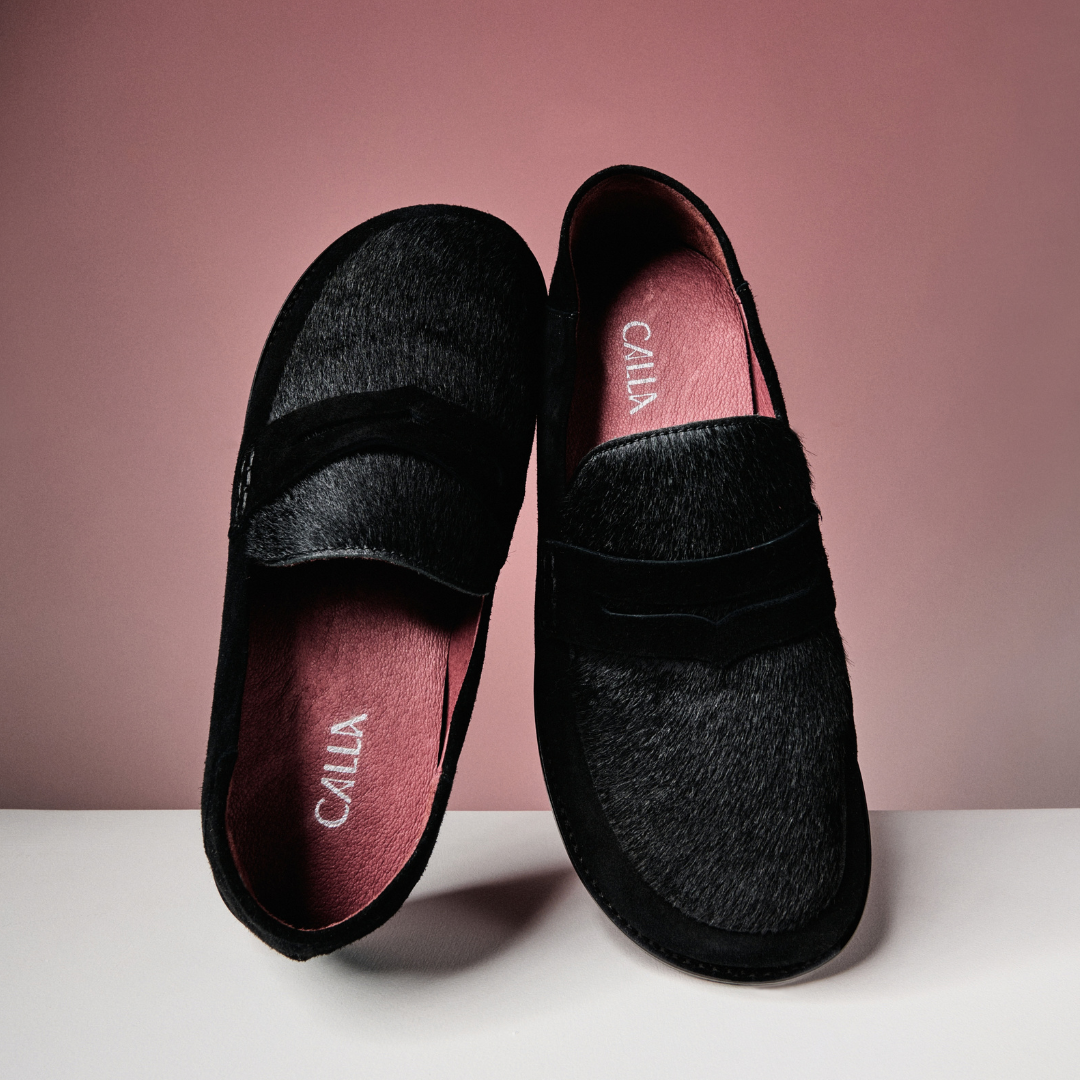
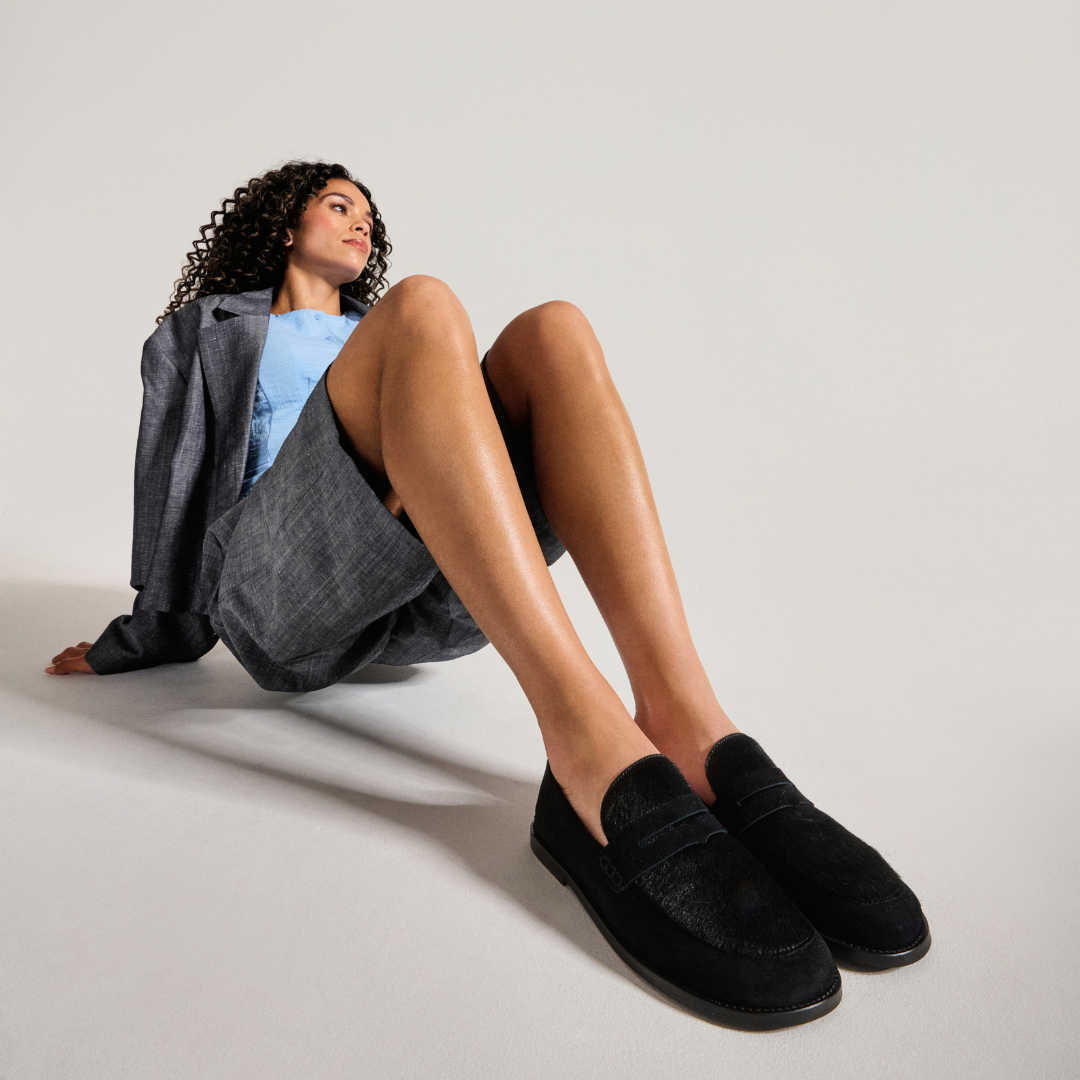
The Meredith is Calla's chunky loafer on a 2.5cm heel, and black leather is the do-everything one. The slight heel and cushioned sole carry a day from the office to dinner, while the wide-enough toe box gives the bunion room a slim loafer wouldn't. Fits up to EE, true to size.
Origin
Handcrafted in Portugal, designed in the UK
Material
Black chunky leather upper, lamb leather lining
Heel
2.5cm
Width cap
Fits up to EE width feet
Toe box
Wide toe box with hidden stretch panel over the bunion area
Browse more images of the Meredith - Black Leather Loafers:
Our Review
The black Meredith is the chunky loafer I wear when a flat feels too slight for tailoring, since the 2.5cm heel and the heavier sole give it some presence under trousers. It takes me from the office to dinner without changing, and the cushioned sole means my feet aren't aching by the evening. The toe box is cut wide enough that my bunion has room rather than being pressed by a narrow loafer. I wear it with trousers or straight jeans. Fits up to EE, true to size.
Pros
2.5cm heel adds height without losing the loafer's flat-shoe ease
Hidden stretch panel flexes over the bunion joint
Cushioned sole takes the impact out of pavement walking
Fits up to EE width feet
Cons
Width fitting caps at EE so EEE feet will be tight
Chunky silhouette sits heavier on the foot than a slim loafer
Slip-on construction means no width adjustment if your foot swells through the day
The Aurora is Calla's lightweight, low-profile suede trainer, and baby pink is the soft pastel pop in the range. A slim soft-suede shape with a wider toe box gives the bunion room without bulk, and the insole lifts out for your own. Runs short, so size up one; fits up to EEE.
Origin
Handcrafted in Portugal at a family-run factory in the Porto region
Material
Baby pink suede upper, lamb leather lining
Heel
Flat, low-profile sole
Fit
Up to EEE width fitting
Toe box
Wide toe box, standard at the heel
Insole
Removable, so you can swap in your own orthotics
Detail
Calla logo embroidered on the side panel
Best for
Bunions and wide feet, paired with relaxed denim, tailored trousers or casual dresses
Browse more images of the Aurora - Baby Pink Suede Wide Width Sneakers:
Our Review
Baby pink is the Aurora I wear when I want a soft hit of colour that still reads gentle, because the pale pink lifts denim or grey without shouting. It is the lightest Calla trainer I own, low to the ground and soft, so it feels less like a shoe and more like a slipper on a long day. The wider toe box gives my bunion room despite the slim shape, and the insole lifts out for my orthotics. The one thing to know is that it runs short, so I sized up by one. Up to EEE, and I brush the suede to keep it fresh.
Pros
EEE width cap accommodates wider feet than the Saturn line
Removable insole leaves room for your own orthotic
Low-profile sole sits flat with both denim and dresses
Lamb leather lining over the bunion area flexes with the joint
Cons
Baby pink suede marks easily and needs a protector spray before first wear
Suede is harder to clean than smooth leather
Currently on preorder so dispatch may not be immediate
The Freya is Calla's tassel loafer, and black suede is the soft, velvety everyday one. A hidden stretch panel in the toe box flexes over the bunion while the wide toe box gives the forefoot room, so a smart loafer doesn't press on the joint. Runs big in suede, so size down a full size; fits up to EEE.
Browse more images of the Freya - Black Suede Loafers:
Our Review
Black suede is the Freya I wear most, because the soft velvety finish dresses up trousers while still feeling relaxed, and the tassels give it a bit of character. The hidden stretch panel sits in the toe box and flexes over my bunion, so the joint isn't pressed the way it is in a stiff loafer. The wide toe box and cushioned insole carry me through a full day at a desk and out to dinner. The one thing to get right is sizing, since the suede runs big and I took a full size down. Up to EEE, and I brush the suede to keep it looking fresh.
Pros
EEE width cap suits wider feet
Hidden stretch panel flexes over the bunion joint
Flat profile for all-day standing or walking
Lamb leather lining against the foot
Cons
Sizing runs a full size large so you must order down
Suede upper picks up rain marks without a weatherproof spray
Black suede shows scuffs on the toe with regular wear
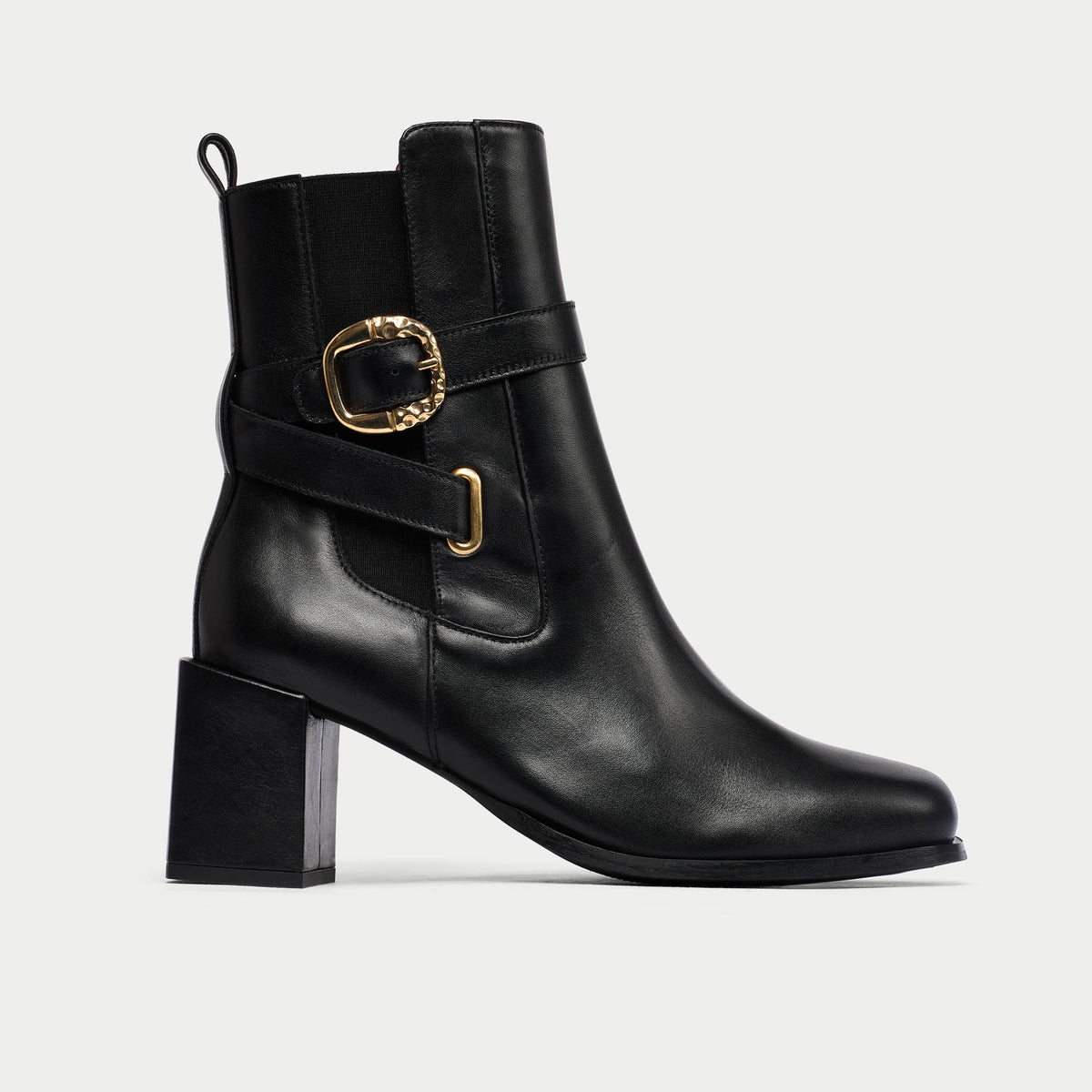
The Rosemary is Calla's Mary-Jane ballerina, a strap-across-the-foot flat in soft black leather for an occasion or a smart day. A hidden 1cm heel adds a gentle lift while strong arch support and the strap keep the foot secure. Fits up to EE, true to size.
Origin
Handcrafted in Portugal, designed in the UK
Material
Soft black leather upper, lamb leather lining
Heel
1cm hidden heel
Style
Mary Jane strap
Sizing
True to size
Width cap
Fits up to EE width feet
Toe box
Wide toe box with hidden stretch panel over the bunion area
Browse more images of the Rosemary - Black Leather Ballerinas:
Our Review
Rosemary is the flat I wear when I want a Mary-Jane strap that looks a little dressed-up, since the black leather and the strap across the foot read smarter than a plain pump. The hidden 1cm heel gives a small lift and the strap holds my foot steady, which helps on a long day or evening. The strong arch support and soft leather keep me comfortable, and the leather gives where my bunion sits. It suits an occasion as easily as a smart work day. Fits up to EE, true to size.
Pros
Mary Jane strap keeps the shoe secured to the foot across the instep
1cm hidden heel adds rear-foot lift while reading as a flat
Soft leather upper softens further over the bunion joint with wear
Arch support inside a ballerina shape
Cons
Width caps at EE so EEE feet will be tight
Single-strap upper covers less foot than a closed loafer for colder weather
Leather sole on a flat shoe means less grip than a rubber-soled trainer on wet pavement
What to look for in walking shoes for bunions
A walking shoe that works for bunions has a wide, foot-shaped toe box and a soft upper that stretches over the joint. Those two features do more for everyday comfort than anything else, and a shoe that gets them wrong won't be rescued by fancy cushioning.
A wide, deep toe box that follows the shape of your foot. Your bunion sits at the widest point of your forefoot, right where most shoes taper inward. A toe box with enough width and depth for your toes to spread rather than compress against the sides takes the pressure off the joint. If you also have hammer toes or Morton's neuroma (a nerve irritation in the ball of the foot that causes burning or tingling), the same wide, deep toe box accommodates those too.
A soft upper with no stiff overlay across your big toe joint. Width alone won't help if a rigid seam or reinforced panel presses right on your bunion. On most everyday shoes, the outside seam falls exactly where the joint protrudes. A soft leather or stretch panel across the forefoot, with a seam-free lining inside the toe box, means nothing rigid presses into the bump. In Calla's sneakers, the external stitching is moved forward, off the bunion, so nothing presses on the joint from the outside. Inside the shoe, the toe box lining is a single piece with no seams, so nothing rubs your bunion from within.
Cushioning and arch support. A cushioned, arch-supported insole absorbs the impact when you're walking and supports the arch under your midfoot. If the insole is removable, you can swap in your own orthotics (custom insoles prescribed by a podiatrist) instead of choosing between the shoe's cushioning and your insert. Every Calla sneaker includes a removable molded footbed on a 3cm sole, deep enough to take an orthotic, so you can use whatever your podiatrist has prescribed. A thicker or slightly curved sole can also ease the bend at the big toe joint with each stride.
An adjustable fastening. Laces or a strap you can loosen give you room to accommodate swelling later in the day. Feet often swell through the afternoon, and a shoe that felt fine at 8am can press on the joint by 3pm. If bending to tie laces is awkward, a side zip lets you set the lace tension once and step in each morning.
A shoe that looks like a shoe, not a medical device. Too many shoes designed for bunions look medical. An everyday walking shoe can have a completely normal sneaker or flat silhouette with the bunion-accommodating features built into the last and the lining, invisible from the outside. A wide toe box doesn't have to mean a shapeless front. A stretch panel can be hidden inside. Cushioning and arch support live in the footbed (the shaped insole your foot rests on). You're far more likely to wear a shoe every day if it looks like something you chose, not something you were prescribed. Dina Gohil, an HCPC-registered podiatrist (registered with the Health and Care Professions Council) based in Mayfair, called it 'refreshing' that Calla shoes 'don't look hideous' in her review, because her patients routinely refuse recommended footwear on exactly those grounds.
Getting the right fit for bunions and wide feet
If you have bunions or wide feet, the fit you need is extra width at the forefoot with your normal fit at the heel. That's the combination that works, and it's different from simply buying a wide shoe.
The most common mistake is sizing up to get more room. Bunions need width, not length. In a 2018 study in BMC Public Health, Buldt and Menz found that half of women were wearing shoes at least 5mm too narrow for their feet, compared with a third of men.
When you size up to get width, you end up with shoes that are too long. Your foot slides forward, your toes jam into the front of the shoe, and you're back to square one, with the bunion pressing against the upper in a different spot while the heel slips with every step.
What works is a shoe with extra width and depth across the forefoot, where the bunion is, and standard width at the heel, so the shoe holds your foot in place.
If you have a wider foot generally, not just a bunion, the same principle applies. A wide-width shoe that's wide all the way round will give you room at the toe box, but the heel will be loose too, and a loose heel causes its own problems: rubbing, blisters, and your foot sliding forward into the tapered front.
What you need is a shoe with extra width where the joint is, without losing the secure heel. Standard fit around the heel with additional width and depth in the toe box.
Calla shoes are designed for feet that are wider at the front than the back. If you have wide feet all over, they will not be the right fit for you.
A few habits give you a better fit:
Measure both feet, because most people have one foot slightly larger than the other, and you should fit the bigger one.
Try shoes on later in the day, when your feet have swollen to their fullest, because a shoe that feels right at 9am can pinch by late afternoon.
And if the shoe has adjustable laces, use them: set the tension per foot, and you'll get a fit that accommodates your bunion without gapping at the back.
Sneakers, flats and other everyday styles for bunions
Any everyday style works for bunions, as long as it keeps a wide, soft forefoot and a secure heel. The bunion-friendly features stay the same whatever the silhouette. What changes is the occasion.
On your feet all day or working a long shift: cushioned sneakers with a deep footbed that can take your own orthotics if you need them. The extra cushioning under the ball of the foot absorbs the cumulative impact of hours of walking or standing.
Can't bend to tie laces each morning: sneakers with a side zip. Set the lace tension once, zip in and out each day. The Estella is built for exactly this. Find it alongside others in our guide to the best sneakers for bunions.
Something smarter than sporty for the office: leather sneakers or loafers with the same wide toe box. A good loafer should hug your bunion rather than squeezing it.
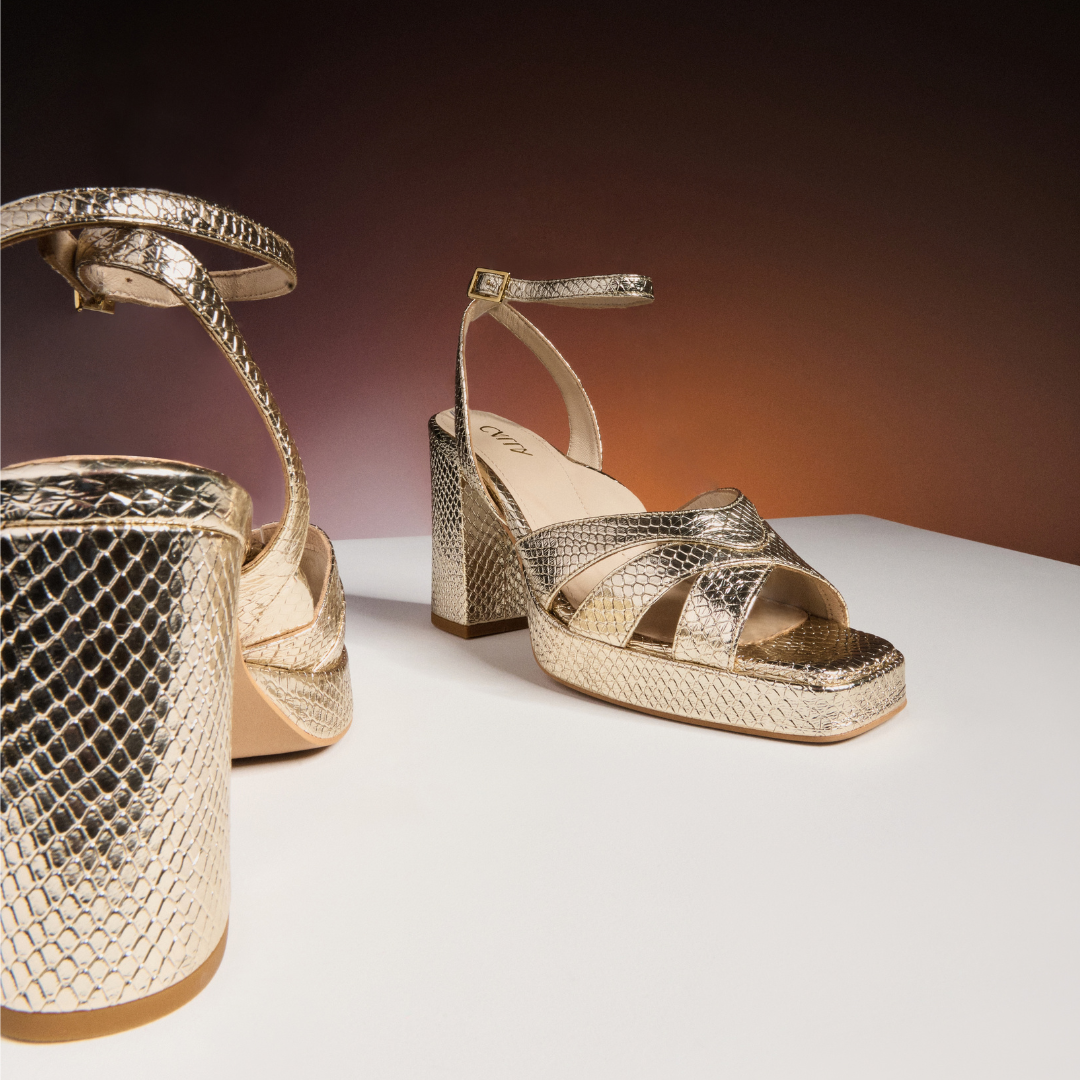
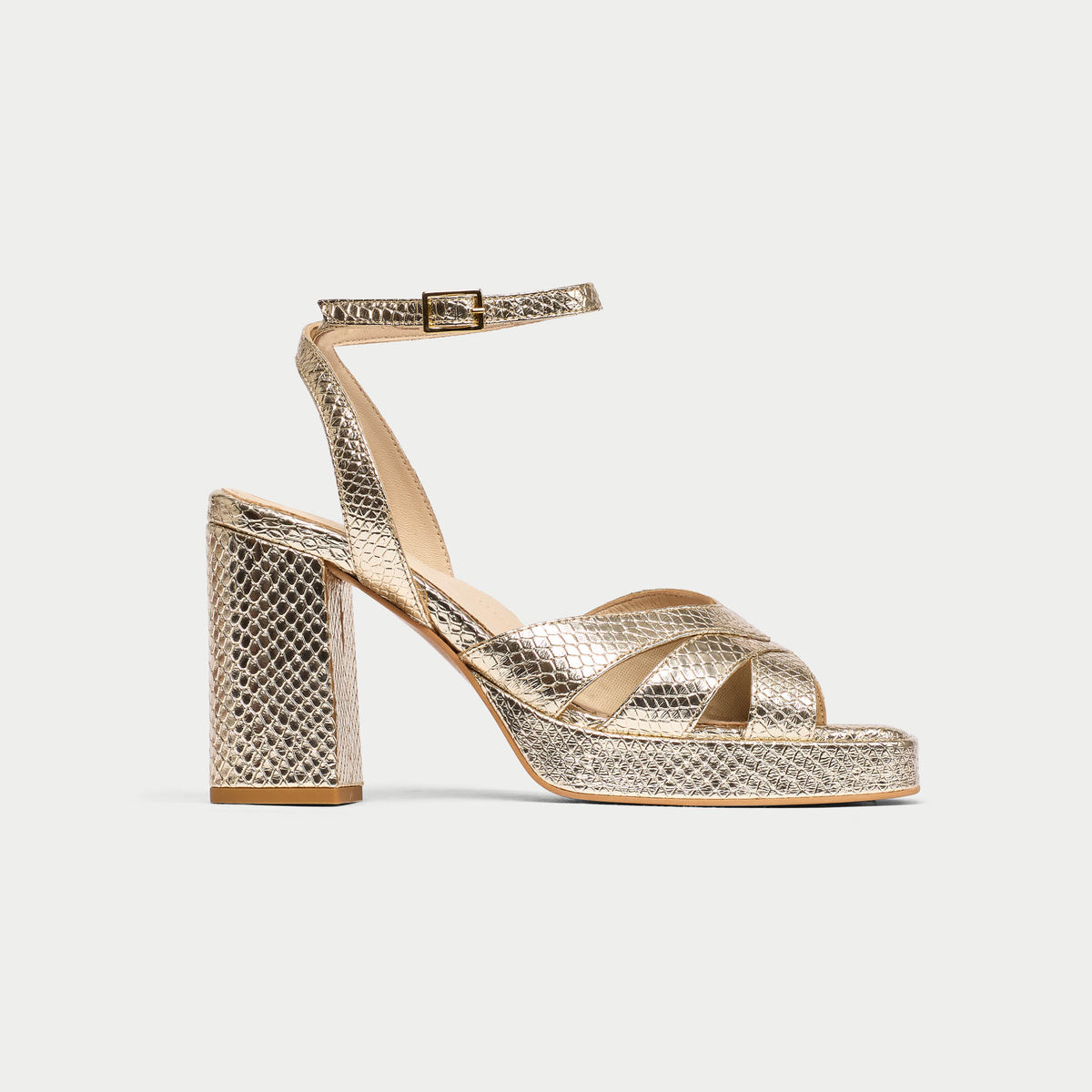
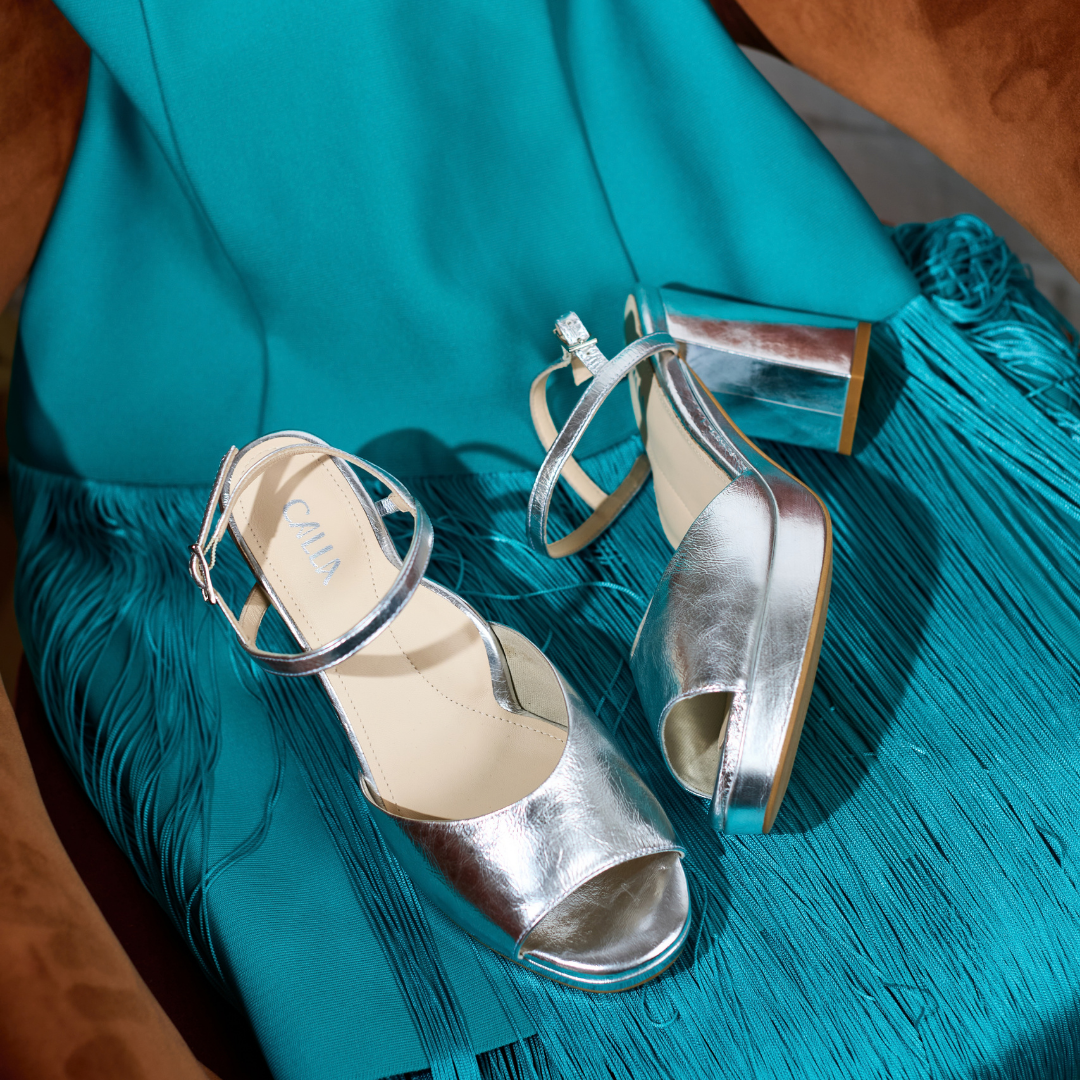
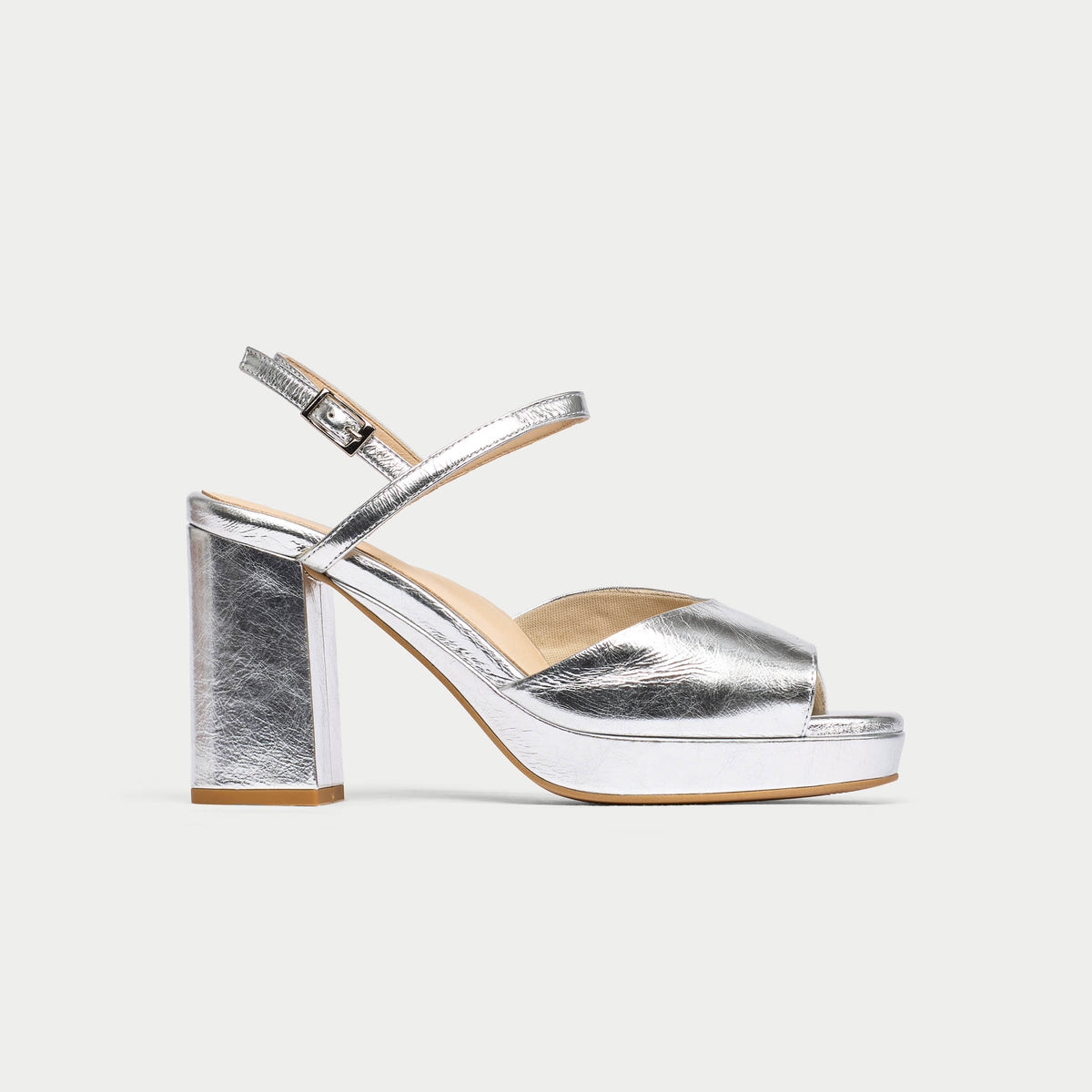
A dressier outfit or an occasion: a heel with a wide, rounded toe box, not a pointed one. For daily wear, keep the height to around 4cm to avoid overloading the big toe joint, and choose a thicker heel for stability. A platform reduces the pitch (the angle between heel and toe), which means less pressure on the forefoot. Calla's occasion heels pair a 3.5-inch heel with a half-inch platform underneath, so the pitch of the foot stays shallow even at a greater height.
Summer: sandals with a broad forefoot and straps positioned to cover and secure your bunion rather than cutting across it.
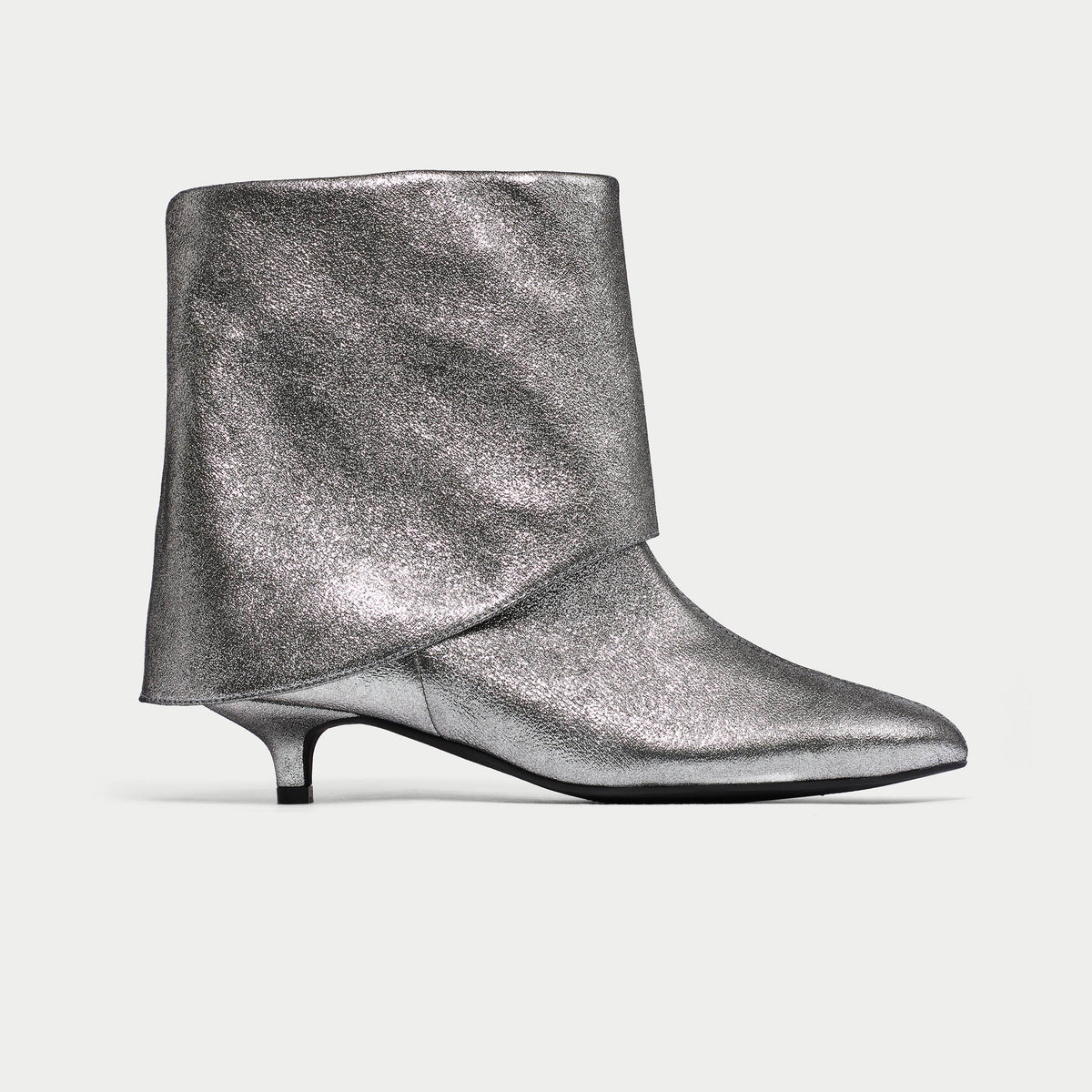
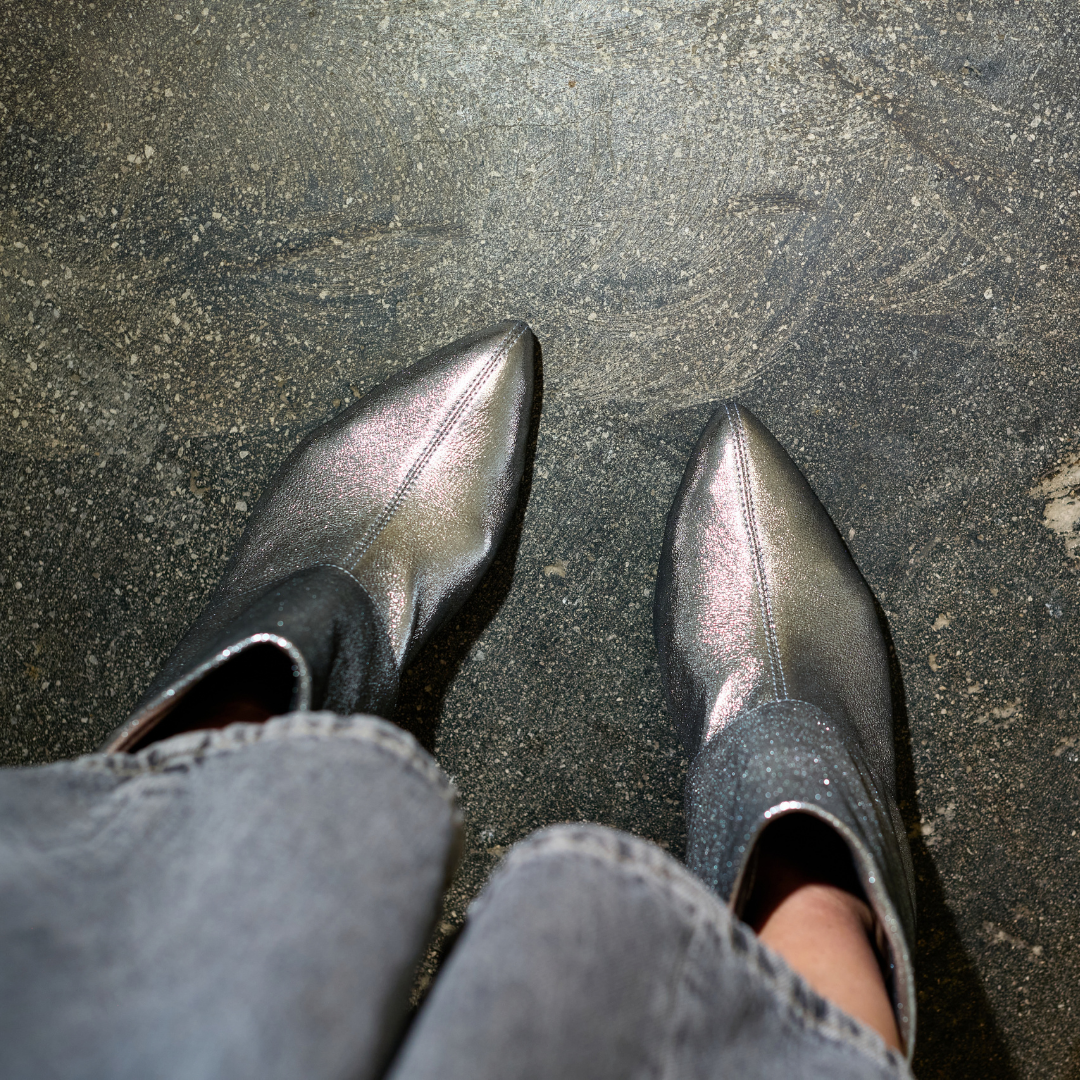
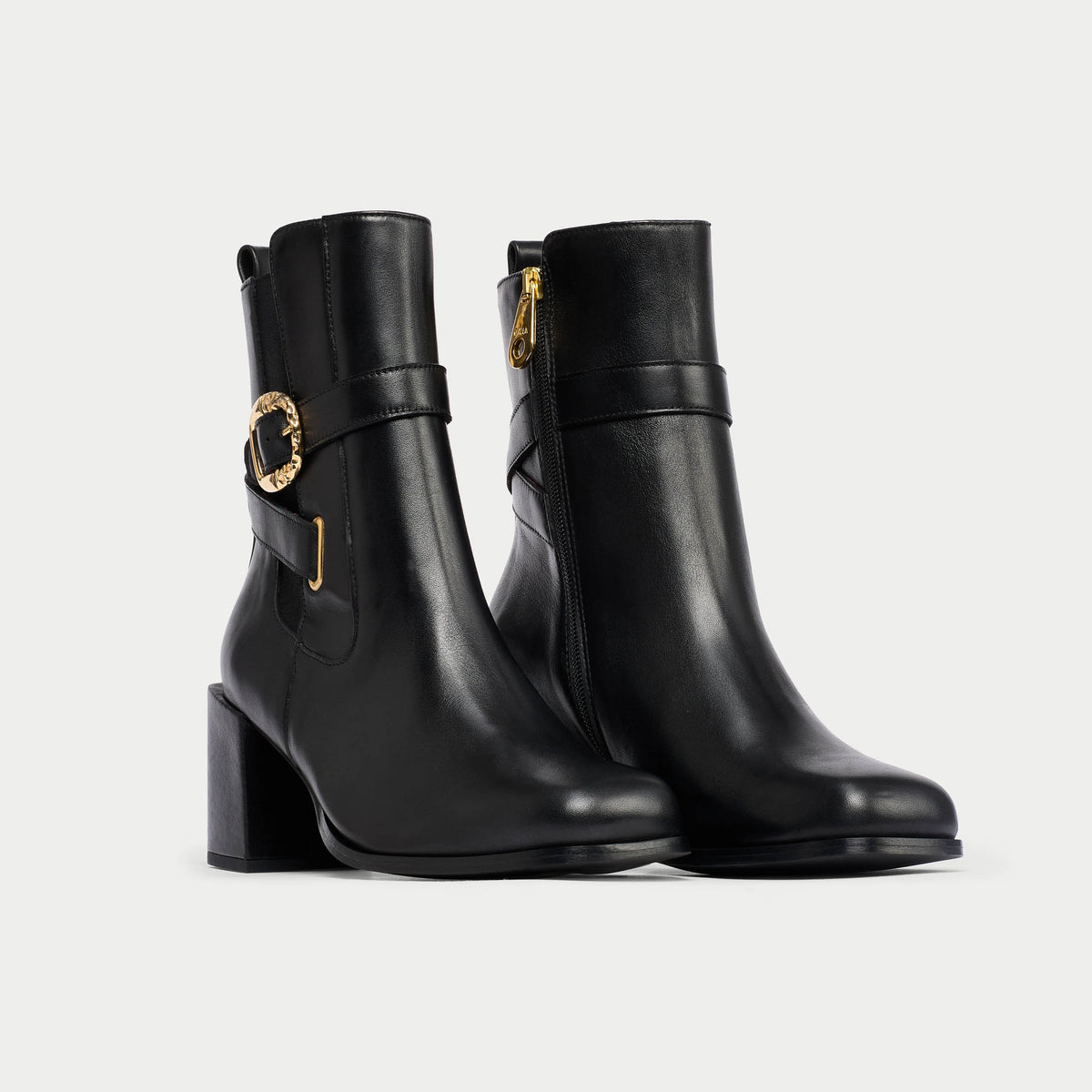
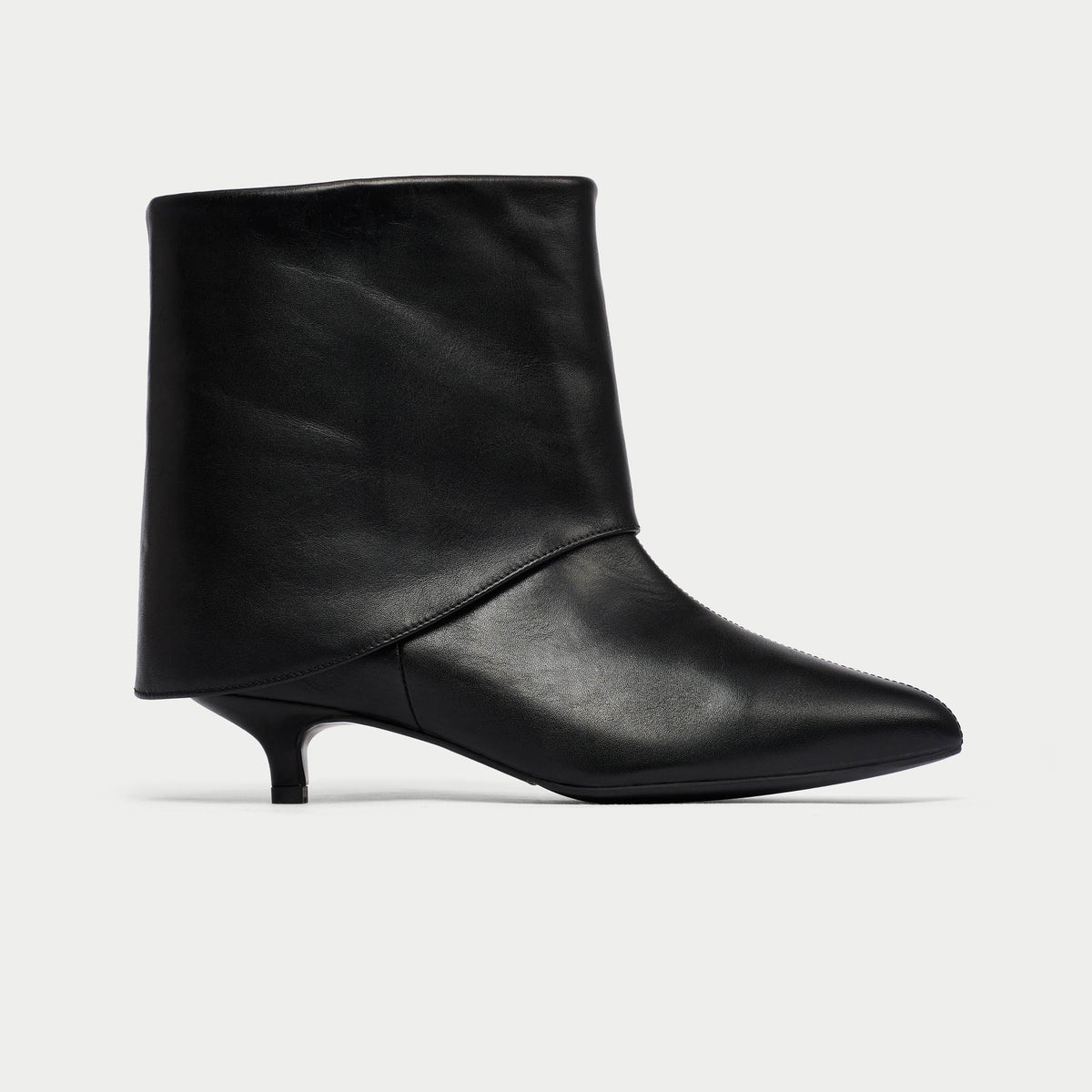
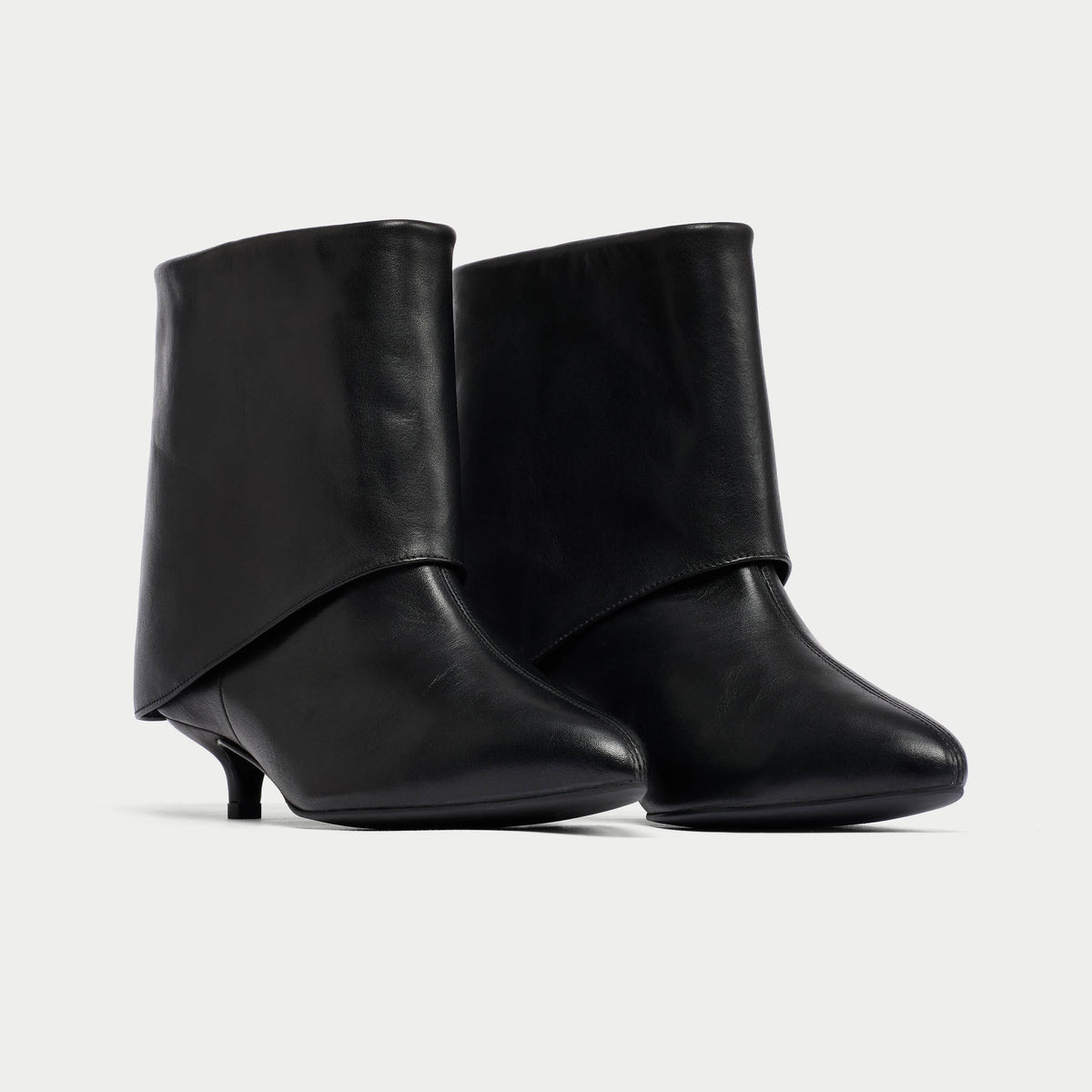
Winter:boots with a soft leather upper, a stretch panel over the toe box, and a zip for easy access. Ankle boots with a roomy forefoot and a secure back give you warmth and support without compressing the joint.
A vegan option: recycled-canvas sneakers on the same wide last, with a seam-free lining so the fabric doesn't rub. That's the Luna.
Feet that swell by the afternoon or two feet that differ in size: lace-up sneakers you can adjust per foot, with a stretch panel across the forefoot that gives as your feet change through the day.
Shoes to avoid if you have bunions
Narrow, pointed toe boxes and stiff overlays across the joint are the worst for bunions. Both compress and rub your bunion, and no amount of breaking in will stretch a reinforced panel that has no give.
Pointed or tapered toe boxes. A tapered toe box forces your big toe further toward the second toe and presses the side of the shoe directly against your bunion. The shape itself is the problem: it puts pressure on the joint exactly where you need space. Calla's pointed styles solve this differently: the shoe is wide across the bunion and the toes stop before the point, so the point itself is an empty extension beyond the foot rather than something your toes are squeezed into.
Stiff, rigid uppers or decorative overlays. A hard upper, a stitched panel, or a buckle positioned over the bunion creates a pressure point that width can't fix. The shoe might be wide enough on paper, but if the material above the joint won't stretch, it's still pressing into the bump.
Very thin, flat soles with no cushioning. A completely flat, unsupportive sole offers no shock absorption under the ball of the foot. Each step lands directly on the forefoot, and over a full day that adds up.
It's the pointed shape and the pressure on the joint that cause the most trouble, not heel height on its own. A low heel with a pointed, narrow toe box can be worse than a moderate heel with a wide, rounded one. That said, if you do wear a heel, a thicker one is better than a very thin stiletto, which reduces your stability when walking and tips more weight onto the ball of the foot.
What the right shoes can and cannot do for bunions
The right shoes change how your bunion feels, not what it is. They lower the pressure and friction on the joint, ease the day-to-day discomfort, and let you walk comfortably for longer. That's real, and it's worth having.
What the right shoes can do
What they cannot do
Lower the pressure and friction on the joint
Straighten the bunion
Ease the day-to-day discomfort
Reverse, correct, or cure it
Let you walk comfortably for longer
Change what it is
Shoes don't straighten a bunion. They don't reverse it, correct it, or cure it. A bunion is a structural change in the joint, and only surgery corrects the underlying deformity.
Our shoes accommodate the bunion, with room and softness where you need it, so it isn't pressed, rubbed, or squeezed. Claire Forbes, an HCPC-registered podiatrist, found the same in her assessment: in our shoes the foot does 'not become impinged at the forefoot' and 'the shoe accommodates the forefoot.' They won't cure your bunions, but they'll make them feel a lot better.
You will also read, more or less everywhere, that the right shoes can stop a bunion getting worse. Ron McCulloch, the principal Podiatric Surgeon and Director of the London Podiatry Center, put it more carefully than that: once a bunion has formed, it is usually not possible to reverse the condition without surgery, and the best one can hope for is to slow down progression and to limit the worsening of the deformity by taking some simple measures.
That is said of good footwear in general, wide, low-heeled, round-toed shoes, and not of any specific brand or product. We think the distinction matters.
McCulloch also noted that orthoses (custom insoles) can help with bunion pain, but that 'there is no particular evidence that this approach can stop or slow down the deformity.' They help how the bunion feels without changing what it is.
Our founder Jenni Bailey attributes her own bunions to inherited foot shape and overpronation (the foot rolling inward when walking), not to shoes. As she has put it, 'even though bunions aren't in themselves hereditary, the shape of your foot is, and the way that you walk is hereditary.' Both her daughters have developed small bunions despite always wearing roomy, wide width shoes.
When to see a podiatrist about bunions
See a podiatrist or your doctor if the pain in your bunion persists or gets worse, if your big toe is noticeably changing shape, or if you're experiencing numbness or tingling. These are signs that you need a professional assessment, not a different pair of shoes.
A podiatrist can give you a proper diagnosis, assess the severity, and talk you through the options. Those range from padding and custom orthotics to a splint for night-time use, and in some cases a referral for surgery. The right shoes are part of day-to-day management, but they're not a substitute for professional advice.
Please remember that the advice in this article is general. If you are experiencing foot pain, you need to see your podiatrist.
FAQs
What is the best walking shoe if you have bunions?
The best walking shoe for bunions has a wide, deep, foot-shaped toe box, a secure heel that doesn't slip, and a cushioned, arch-supported insole. The toe box gives the bunion room, the secure heel stops your foot sliding forward, and the cushioning absorbs impact under the ball of the foot.
A soft upper with no stiff seams or overlays across the joint is just as important as the width.
Only if the width is at the forefoot. A wide-width shoe that's wide all the way round gives you room at the toe box but also loosens the heel, and a loose heel means your foot slides forward, blisters, and the toes end up compressed against the front of the shoe.
What you need is width across the toe box with a standard fit at the heel.
Do arch supports help bunions?
Arch supports can improve comfort and help support the foot, but they don't correct the bunion itself. They change how your foot sits in the shoe, which can reduce some of the pressure on the joint.
A shoe with a removable footbed is worth choosing, because it lets you swap in orthotics prescribed by your podiatrist if you need more targeted support.
Can you get rid of bunions without surgery?
No. A bunion is a structural change in the joint, and only surgery corrects it. Shoes, padding, orthotics, toe spacers, and other conservative measures can ease the symptoms and reduce pressure on the joint, but they don't reverse the deformity.
If your bunion is painful or getting worse, see your podiatrist for a proper assessment.




Leave a comment
This site is protected by hCaptcha and the hCaptcha Privacy Policy and Terms of Service apply.