If your feet ache by mid-afternoon, or you've stopped wearing half the shoes in your closet because they hurt, you already know the problem isn't a lack of options in the stores. It's a lack of the right ones.
Most women's shoes are still built around one average foot shape, and if your feet don't match it, whether because of bunions, fallen arches, swelling, or something like plantar fasciitis (inflammation of the band of tissue running along the sole of your foot), every pair you try presses where it shouldn't.
A supportive, well-fitted shoe won't cure whatever is causing the pain, but it can reduce the pressure, support your foot where it needs it, and genuinely change how your feet feel by the end of the day.
And it doesn't have to look like something prescribed by a hospital.
At Calla, we design shoes from the inside out for women with bunions and wide feet, handmade in Portugal by master shoemakers, but the features that matter apply whatever your foot problem.
There is no single best shoe for all painful feet. What helps depends on where the pain sits and what's behind it. A shoe that reduces heel pain may do nothing for a bunion. Something beautifully cushioned can still be the wrong width.
What works is matching the shoe to the pain: cushioning and a slight heel lift for heel pain, forefoot padding for the ball of the foot, width and soft uppers for bunions.
The Charlotte is Calla's crossover ballet flat, the one customers keep coming back to, here in soft black nappa leather. The leather crosses over the toes and stretches across the bunion, with a panel that gives both bunions and tailor's bunions room. Fits up to EEE, true to size.
Origin
Handcrafted in Portugal at a family-run factory in the Porto region
Material
Soft black nappa leather upper, lamb leather lining
Heel
Flat ballerina
Colour
Black
Fit
True to size, fits up to EEE width feet
Toe box
Stretch panel across the toe box for bunions and tailor's bunions, crossover design that stretches to the foot shape
Footbed
Enhanced arch support, extra cushioning at the heel
Browse more images of the Charlotte - Black Leather Ballerinas:
Our Review
Black Charlotte is the ballet flat I reach for most, because the crossover design stretches gently over my bunion instead of pressing a hard line across the joint. The soft nappa leather gives where my foot is widest, and the stretch panel handles both my bunion and the tailor's bunion on the little-toe side. Enhanced arch support and extra heel cushioning mean it carries a full day rather than leaving my feet flat and sore. It is the flat I'd recommend to anyone after a bunionectomy who needs softness and width over the scar area. Fits up to EEE, true to size.
Pros
Stretch panel across the toe box gives over both the bunion and the tailor's bunion sides
Nappa leather softens with wear
Extra heel cushioning eases the back of the foot
Fits up to EEE width
Cons
Flat ballerina sole has limited grip in wet weather
Crossover stretch design relies on the panel rather than laces so cannot be tightened
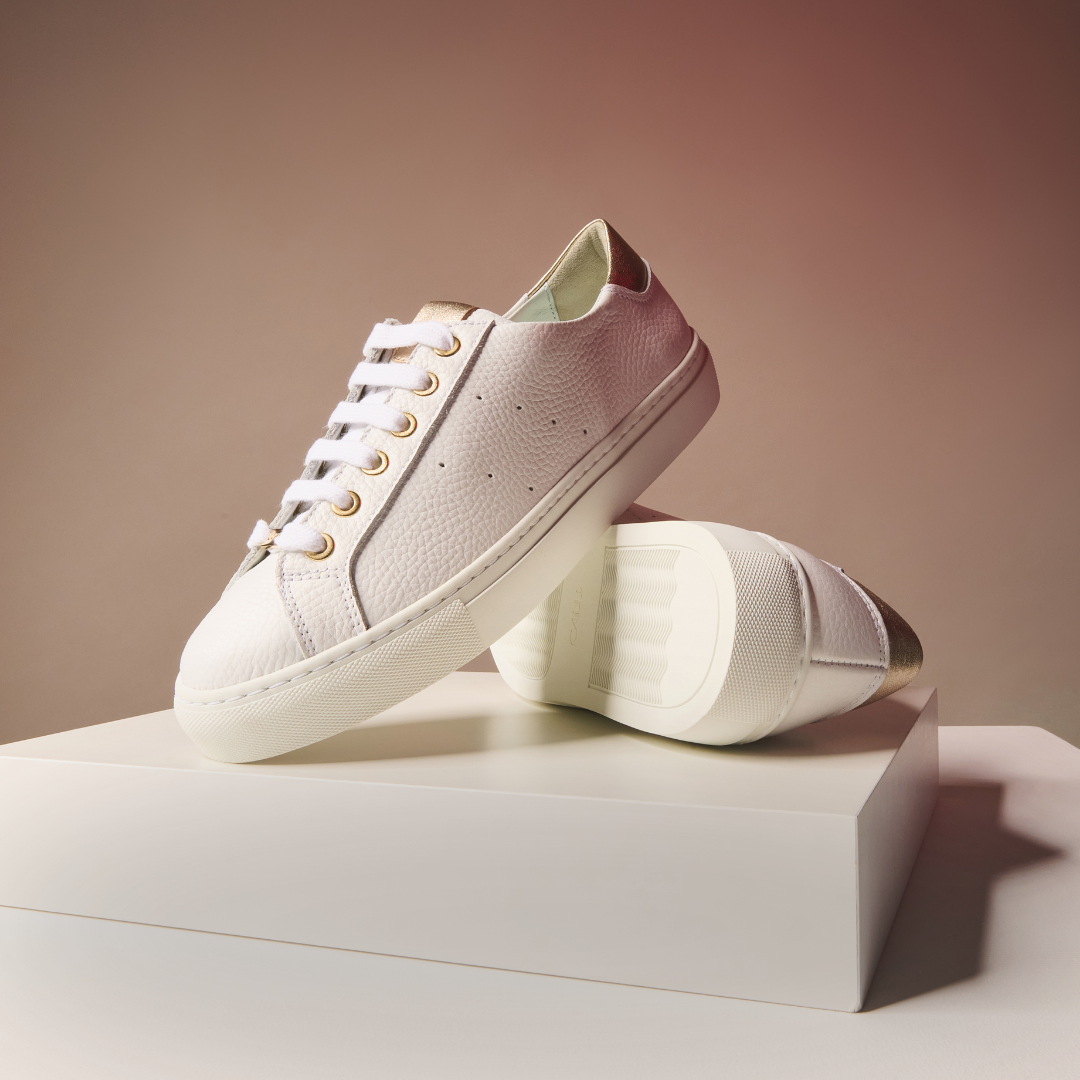
A clean white grain-leather trainer with a removable moulded footbed, so you can drop in your own orthotics, and a fully lined seam-free toe box that gives the bunion a smooth surface. Lace-ups let you open the forefoot towards an EEE width, and the cushioned arch-supported insole carries a full day of walking. True to size.
Origin
Handcrafted in Portugal at a family-run factory in the Porto region
Material
White grain leather upper, lamb leather lining
Heel
Flat
Colour
White
Fit
Fits EE-EEE width feet
Toe box
Wider toe box with extra depth, fully lined with no internal seams
Footbed
Removable moulded footbed with arch support
Closure
Lace-up for forefoot width adjustment
Press
Selected by Hello, Good Housekeeping, The Independent and The London Evening Standard among stylish trainers for wide feet
Browse more images of the Star - White Grain Leather Wide Fit Sneakers:
Our Review
The Star is the trainer I recommend to anyone who wears orthotics, because the moulded footbed lifts straight out and my own insole drops in, which almost no white fashion trainer lets me do. The toe box is fully lined with no internal seams, so nothing rubs across my bunion on a long walk, and I can loosen the laces to open the forefoot when the joint swells later in the day. It runs wide to an EEE but reads as an ordinary white sneaker, so it goes with jeans and a blazer or a shirt dress without looking like a comfort shoe. I have walked through whole city days in them without the forefoot ache I used to expect. True to size for me.
Pros
Grain texture on the leather hides minor scuffs better than smooth white leather
Removable moulded footbed lets you slot in your own orthotic
Seam-free toe box lining over the bunion area
Lace-up forefoot adjusts from EE to EEE
Cons
White leather still marks in wet or muddy conditions
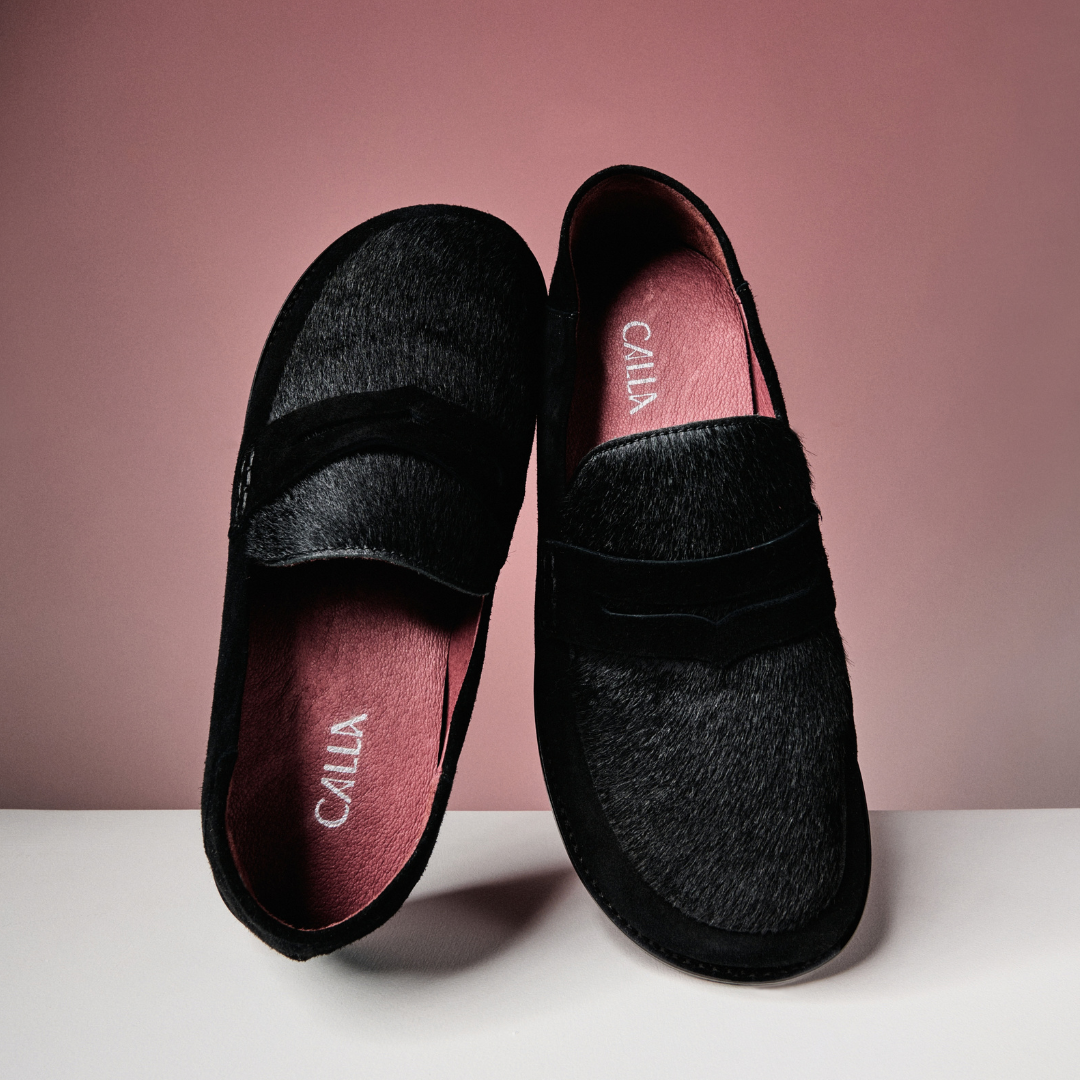
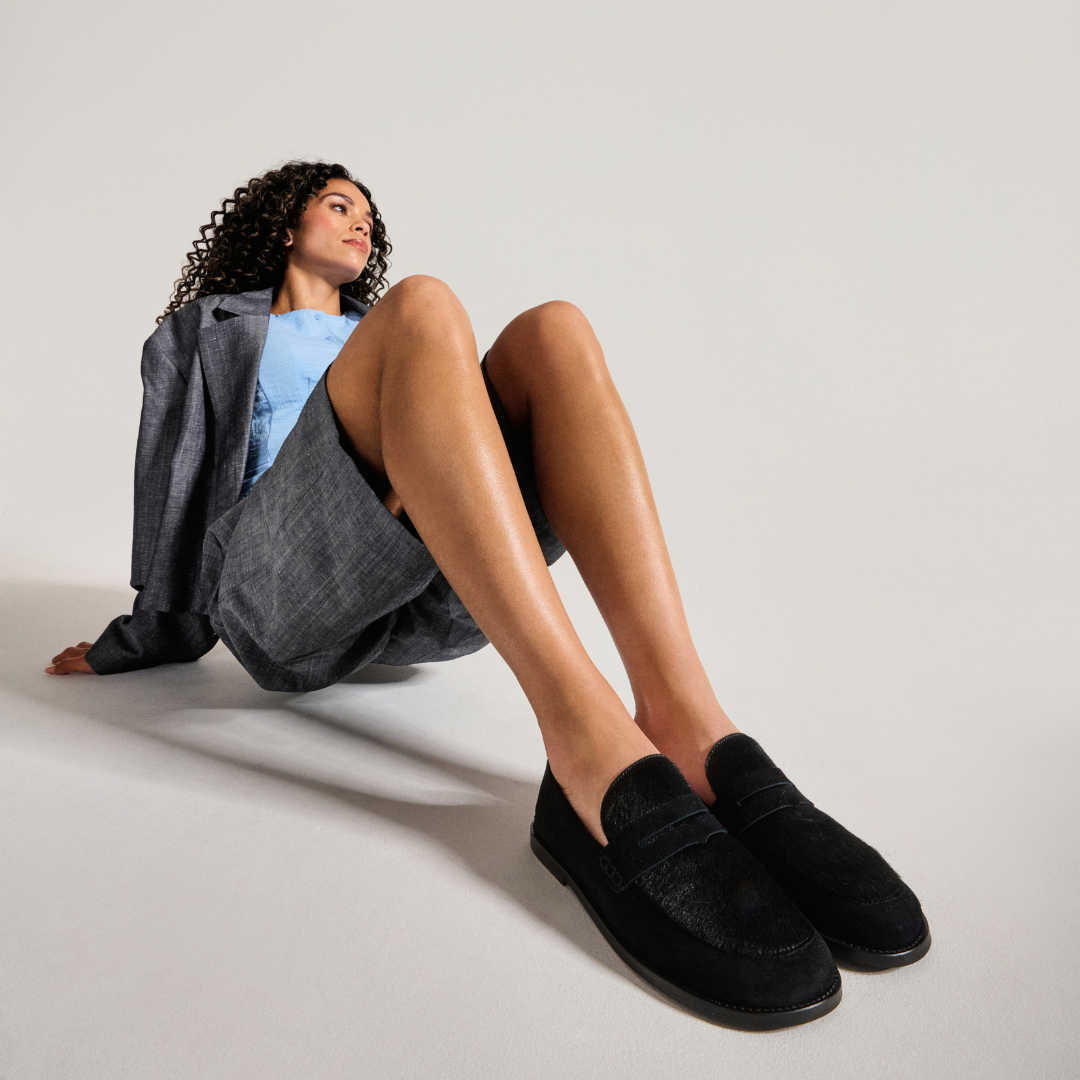
The Freya is Calla's tassel loafer, and black suede is the soft, velvety everyday one. A hidden stretch panel in the toe box flexes over the bunion while the wide toe box gives the forefoot room, so a smart loafer doesn't press on the joint. Runs big in suede, so size down a full size; fits up to EEE.
Browse more images of the Freya - Black Suede Loafers:
Our Review
Black suede is the Freya I wear most, because the soft velvety finish dresses up trousers while still feeling relaxed, and the tassels give it a bit of character. The hidden stretch panel sits in the toe box and flexes over my bunion, so the joint isn't pressed the way it is in a stiff loafer. The wide toe box and cushioned insole carry me through a full day at a desk and out to dinner. The one thing to get right is sizing, since the suede runs big and I took a full size down. Up to EEE, and I brush the suede to keep it looking fresh.
Pros
EEE width cap suits wider feet
Hidden stretch panel flexes over the bunion joint
Flat profile for all-day standing or walking
Lamb leather lining against the foot
Cons
Sizing runs a full size large so you must order down
Suede upper picks up rain marks without a weatherproof spray
Black suede shows scuffs on the toe with regular wear
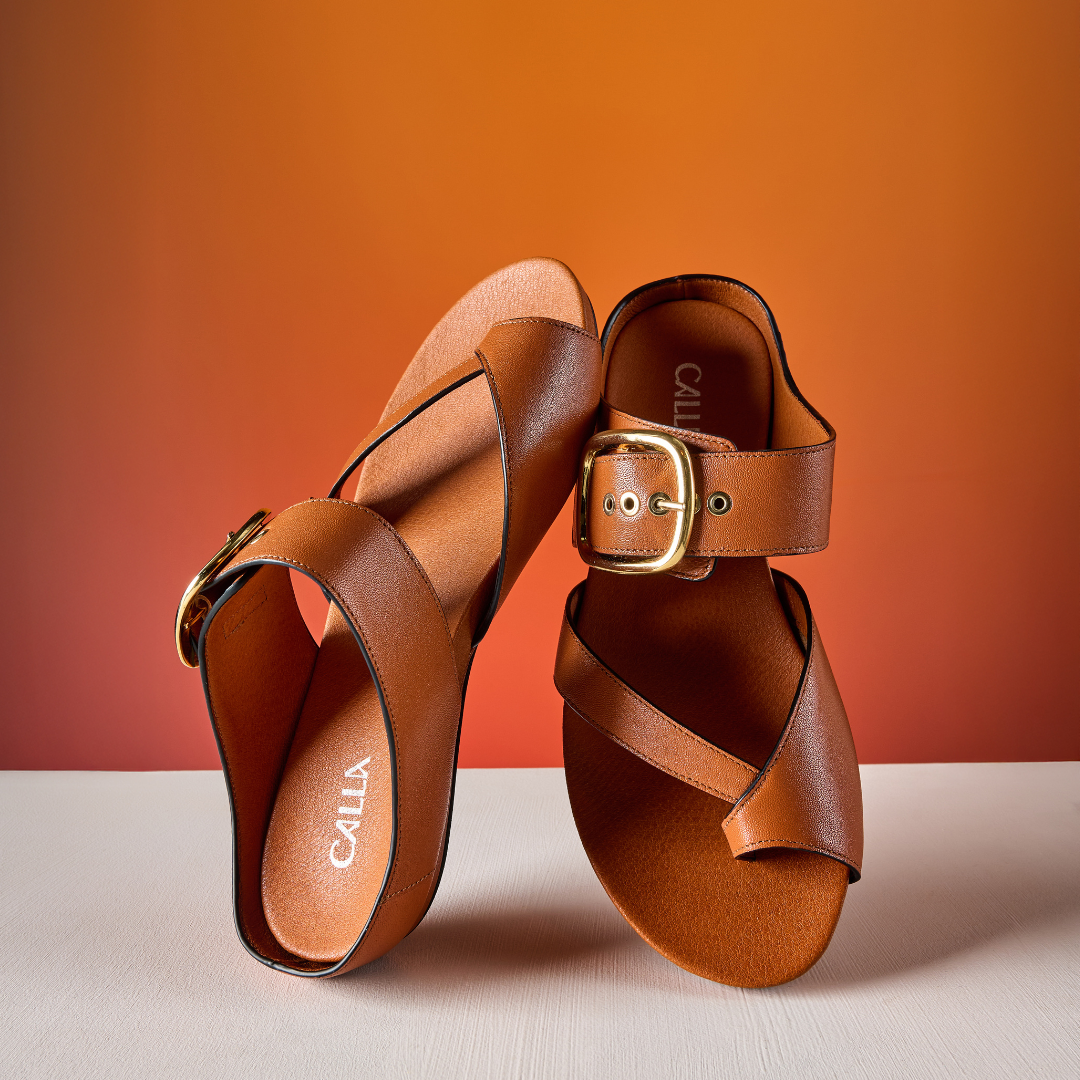
The Ruby sandal in soft tan suede, the warm casual one you reach for with shorts and sundresses rather than for an occasion. The strap covers the bunion and the moleskin 'hallux' panel cushions the joint, so an everyday sandal is still built for a wide foot. Fits EE-EEE, true to size.
Origin
Handcrafted in Portugal at a family-run factory in the Porto region
Material
Tan suede upper, lamb leather lining
Heel
Flat
Style
Toe-post sandal with strap positioned to cover the bunion joint
Fit
True to size, EE-EEE width
Insole
Arch-supported cushioned insole with hidden moleskin hallux panel
Browse more images of the Ruby - Tan Suede Sandals:
Our Review
Tan suede is my everyday Ruby, the pair that ends up on my feet most of the summer because it is soft, warm in tone and goes with shorts, sundresses and linen without a second thought. It still does the bunion job, with the strap across the joint and the moleskin panel cushioning underneath, so casual doesn't mean my forefoot suffers. The arch support is what separates it from a flat high-street sandal that leaves my feet aching by mid-afternoon. I keep it for daytime and save the smooth leathers for dressier plans, since suede and the beach aren't always friends. True to size at an EE-EEE.
Pros
Strap sits over the hallux joint so the bunion is covered in an open sandal
Hidden moleskin hallux panel sits inside the insole over the joint
EEE width cap accommodates wider forefeet
Tan colour pairs with summer dresses
Denim and linen
Cons
Suede shows water marks and needs a suede protector ahead of unpredictable summer weather
Flat pitch suits short walks better than long city days for some wearers
Toe-post style needs a short break-in for the post between the toes
The Cosmos is the chunky trainer Calla's founder built because the dad-trainer trend kept squeezing her bunions, and black is the wear-with-everything one. A chunky cushioned outsole adds height, while the wider, deeper toe box and removable insole give the forefoot room and take your orthotics. Fits EE-EEE, true to size.
Origin
Handcrafted in Portugal at a family-run factory in the Porto region
Material
Black leather upper with textile side detail, lamb leather lining
Heel
Flat with chunky outsole
Closure
Lace-up
Fit
Wide fit, EE and EEE width feet, standard fit around the heel with additional width and depth in the toe box
Insole
Removable moulded footbed with arch support, swap for own orthotics
Browse more images of the Cosmos - Chunky-Sole Black Wide Fit Sneakers:
Our Review
Black is the Cosmos I reach for most, because a chunky trainer usually crushes my forefoot and this one was designed by someone with bunions to do the opposite. The wider, deeper toe box means my bunion has room inside a sporty shape, and the insole lifts out for my orthotics. The chunky outsole gives me a bit of height and a lot of cushioning on hard pavements without any forefoot pressure. In black it goes with jeans, joggers or a midi without a thought. True to size in a wide fit, EE-EEE.
Pros
Chunky outsole gives lift and stride length without putting pitch through the forefoot
Removable footbed accepts the wearer's own orthotics
EEE width cap with extra toe-box depth accommodates wider forefeet and Morton's neuroma
Lace-up closure adjusts across the instep
Cons
Chunky-sole silhouette is heavier on the foot than a standard trainer profile
Leather upper needs conditioning to keep the side panels looking fresh
Sporty trainer styling means it will not slot into smart workwear or occasion outfits
The Saturn rides on a 3cm platform sole, and the cream-and-orange suede is its warm retro-sporty colourblock. The platform adds height with no heel pitch, while the wider seam-free toe box gives the bunion a smooth surface. Fits EE, true to size.
Origin
Handcrafted in Portugal at a family-run factory in the Porto region
Material
Cream and orange suede upper, lamb leather lining
Heel
Flat with a 3cm platform sole
Fit
True to size, fits up to EE width
Toe box
Wider toe box with seamless lining over the bunion area
Browse more images of the Saturn - Cream & Orange Suede Wide Fit Sneakers:
Our Review
Cream and orange is the Saturn I wear when I want a bit of height from a trainer without a heel, because the 3cm platform lifts me evenly rather than pitching my weight forward onto the bunion. The two-tone suede has a retro, sporty look that lifts plain denim. The wider seam-free toe box means nothing rubs my bunion, and the laces let me fine-tune the forefoot. Worth knowing it fits an EE rather than going up to EEE, so it suits a moderately wide foot. True to size, and I brush the suede.
Pros
3cm platform sole adds height without a heel angle
Seamless toe-box lining means no stitching to rub the bunion joint
Lace-up lets you slacken the forefoot when feet swell
Cushioned arch-supported insole inside
Cons
Suede needs weatherproofing before wet-weather wear
Cream panels show scuffs and dirt more than darker colours
EE the width cap so EEE feet will need a different model
The Estella is Calla's zip-up trainer with no laces to tie, and black leather is the smart everyday one. A side zip means easy on and off without bending, while the removable moulded footbed and wider fit give the bunion room and take your orthotics. Fits up to EEE, true to size.
Origin
Handcrafted in Portugal, designed in the UK
Material
Black leather upper, lamb leather lining
Heel
Flat
Width cap
Fits up to EEE width feet
Toe box
Wide toe box
Closure
Side zip instead of laces
Footbed
Removable moulded footbed, swap in your own orthotics
Press
Voted one of the best stylish trainers for wide feet by Hello, Good Housekeeping, The Independent, The London Evening Standard
Browse more images of the Estella - Black Leather Zip-Up Wide Fit Sneakers:
Our Review
The black Estella is the trainer I reach for when I don't want to bend down and tie laces, because the side zip means I step straight in and out. In black leather it looks tidy enough for a casual office or smart-casual day, not just the gym. The wider fit and moulded footbed give my bunion room, and the footbed lifts out for my orthotics. The zip also means a consistent fit every time rather than laces I retie. True to size, up to EEE.
Pros
Side zip means you slip the trainer on without retying laces
Removable moulded footbed for own orthotics
EEE width fitting accommodates wider feet than most trainer brands
Black leather hides scuffs and city-pavement marks better than white
Cons
Zip is a moving part that adds a wear point lace-ups do not have
No laces means no further width adjustment beyond the fixed zip line
All-black trainer reads more formal than casual so it suits office and smart-casual wear more than sport
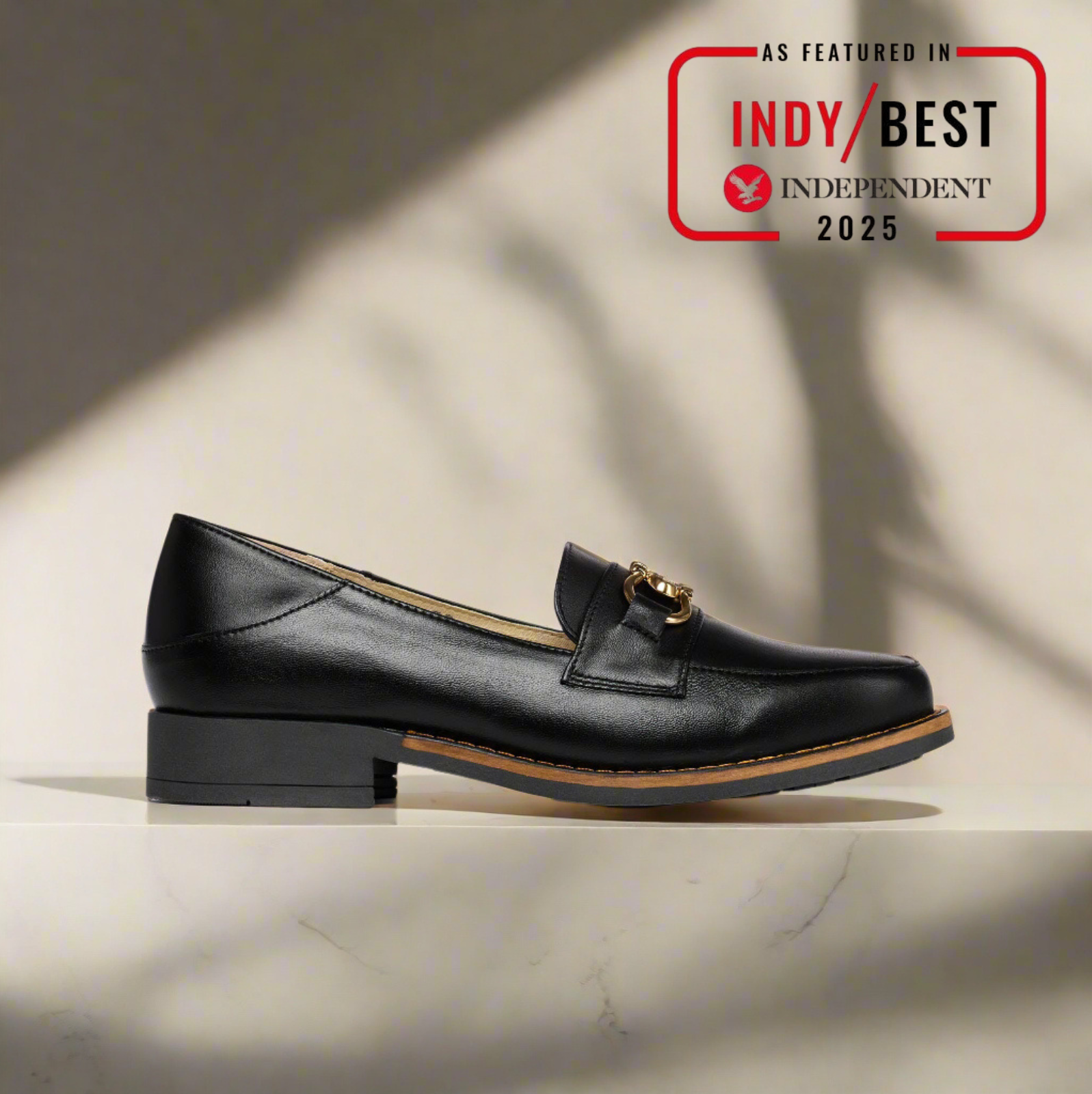
The Meredith is Calla's chunky loafer on a 2.5cm heel, and black leather is the do-everything one. The slight heel and cushioned sole carry a day from the office to dinner, while the wide-enough toe box gives the bunion room a slim loafer wouldn't. Fits up to EE, true to size.
Origin
Handcrafted in Portugal, designed in the UK
Material
Black chunky leather upper, lamb leather lining
Heel
2.5cm
Width cap
Fits up to EE width feet
Toe box
Wide toe box with hidden stretch panel over the bunion area
Browse more images of the Meredith - Black Leather Loafers:
Our Review
The black Meredith is the chunky loafer I wear when a flat feels too slight for tailoring, since the 2.5cm heel and the heavier sole give it some presence under trousers. It takes me from the office to dinner without changing, and the cushioned sole means my feet aren't aching by the evening. The toe box is cut wide enough that my bunion has room rather than being pressed by a narrow loafer. I wear it with trousers or straight jeans. Fits up to EE, true to size.
Pros
2.5cm heel adds height without losing the loafer's flat-shoe ease
Hidden stretch panel flexes over the bunion joint
Cushioned sole takes the impact out of pavement walking
Fits up to EE width feet
Cons
Width fitting caps at EE so EEE feet will be tight
Chunky silhouette sits heavier on the foot than a slim loafer
Slip-on construction means no width adjustment if your foot swells through the day
The Hallie Mary-Jane court in soft almond leather, a warm nude-tan that lengthens the leg where black would cut it short. A stable 5cm block heel and EEE toe area keep the bunion comfortable while the strap holds the foot. Fits up to EEE, true to size.
Style
Mary Jane court shoe with pointed toe
Material
Almond patent leather upper, lamb leather lining
Heel
5cm block heel
Finish
Glossy patent
Fit
Fits up to EEE width
Toe box
Pointed toe over a wide toe box, bunion-friendly fit
Insole
Cushioned, arch-supported
Best for
Office, evening events, weddings
Origin
Designed in the UK, handcrafted in Porto, Portugal
Browse more images of the Hallie - Almond Leather Pumps:
Our Review
Almond is the Hallie I wear when I want a warm nude court that makes my legs look longer under a hem, since the soft tan tone blurs into the leg. The strap holds my foot and the 5cm block keeps me steady through a work day or an evening. The EEE width means the pointed toe sits ahead of my toes while my bunion has room. It pairs with cream, camel and tailoring. Fits up to EEE, true to size.
Pros
5cm block heel sits in the all-day wearable range
Mary Jane strap holds the shoe on the foot without pressing the bunion joint
Pointed toe over Calla's wide toe last so the shape is slimmer than the foot inside
EEE width cap with lamb leather lining
Cons
Patent finish shows scuffs and scratches more visibly than matt leather
Pointed toe is a closer-cut shape than the round-toe styles in the range
The Eloise is Calla's summer wedge sandal in soft croissant suede, a warm beige on a wedge that lifts you evenly without tipping weight onto the forefoot. Extra width through the forefoot gives the bunion room. Fits up to EEE, true to size.
Origin
Handcrafted in Porto, Portugal
Material
Croissant suede upper, lamb leather lining
Heel
Wedge
Width cap
Fits up to EEE
Toe box
Wide last with hidden stretch panel over the bunion area
Browse more images of the Eloise - Croissant Suede Wedges:
Our Review
Croissant suede Eloise is the wedge I wear for summer when I want height that I can actually walk in, since the wedge lifts me evenly rather than pitching my weight onto my bunion. The warm croissant beige is a soft neutral that goes with most summer outfits, and the extra width gives my forefoot room. It carries a summer day or evening on my feet. I keep the suede out of the rain. Fits up to EEE, true to size.
Pros
EEE width cap accommodates wider forefeet
Hidden stretch panel flexes over the bunion joint
Croissant is a warm neutral that pairs across summer outfits
Arch-supported insole carries through a full day
Cons
Suede needs proofing before wear and shows water marks
Light croissant shade shows scuffs around the toe
Wedge pitch is harder to pair with formal trousers than a block heel
Common causes of foot pain in women
Heel pain, arch pain, pain across the ball of the foot and pain around the big toe joint all point to different causes and respond to different features in a shoe. Where your foot hurts is the first clue to what's driving the pain and which kind of shoe will help.
Footwear is a common trigger. Years of narrow, pointed or high-heeled styles put pressure on the forefoot, crowd the toes and strain the arch. But shoes are rarely the whole story.
The shape of your foot is often inherited, and that underlying shape determines how vulnerable you are. Bunions, for instance, develop from a combination of genetics and foot structure, not from shoes alone, though poorly fitting footwear can certainly make them worse. If you'd like to understand what causes bunions and how they develop, we've written about that in more detail.
Standing for long stretches on hard floors loads the heel and the ball of the foot in ways that softer surfaces don't. And women's feet face a few additional pressures: hormonal changes during pregnancy and menopause can loosen the ligaments that hold the arch together, causing feet to spread and swell, sometimes permanently.
Combine that with years of footwear that prioritises shape over room, and it is no surprise that by middle age many women are dealing with pain they didn't have in their twenties.
A 2023 meta-analysis by Cai et al. confirms how uneven that burden falls: across studies worldwide, foot pain affects roughly one in five adults, but 23.74% of women report it compared with 11.43% of men.
The cause matters because it points to the shoe. Heel pain needs different features from bunion pain. A swollen foot needs a different fit from a narrow one with a high arch. Once you know where the pain sits, you can stop guessing.
What to look for in shoes for painful feet
Six features separate a shoe that reduces foot pain from one that just feels soft in the shop: arch support, cushioning, a stable sole, a roomy toe box, a secure fastening and a low, stable heel. Not every shoe needs all six, but the more of them it has, the less your foot has to compensate for what's missing.
Arch support holds the arch in its natural position and stops it collapsing under your weight. Without it, your foot rolls inward, straining the plantar fascia and putting extra pressure on your big toe joint. This is the single feature that makes the biggest difference across the widest range of foot problems.
Cushioning absorbs the impact when you're walking, so your heel and the ball of your foot don't take the full force. But cushioning alone isn't enough. An over-soft shoe feels lovely for the first half hour and then collapses, leaving your foot unsupported and often worse off than before. What you want is cushioning with structure underneath it.
A stable or rocker sole limits how far your foot bends at the toes during each step. A firmer sole is particularly helpful for plantar fasciitis and arthritis, where bending the big toe joint is painful. A rocker sole does the same job by rolling you forward through the stride rather than forcing the toes to flex.
A roomy toe box gives your toes space to spread and sit flat. If the shoe squeezes the forefoot, it presses on bunions, compresses nerves and forces the toes into positions they weren't designed for. Look for width and depth across the toe area, not just a longer shoe.
A secure fastening, whether laces, a strap or a zip, keeps the foot in place inside the shoe. Without it, your foot slides forward, jamming your toes into the front and undoing the benefit of all that extra room in the toe box. Adjustable laces are especially useful if your feet swell during the day.
A low, stable heel keeps your weight distributed evenly. Anything above about 4 cm shifts weight onto the ball of the foot and the toes. But completely flat isn't the answer either: a slight heel lift, even just a centimeter, eases tension on the Achilles tendon and the plantar fascia. A thicker heel is better than a thin one because it reduces pressure on the toes and adds stability as you walk.
Two more features worth looking for: a removable footbed (the shaped insole inside the shoe), which lets you swap in your own orthotic (a custom insole prescribed by a podiatrist) so the shoe works with your clinician's advice rather than replacing it; and a soft upper with no stitching over sore joints, which makes an enormous difference if you have a bunion or any area of the foot that's sensitive to rubbing.
We build our footbeds deep enough to take an orthotic, so if your podiatrist has prescribed custom insoles they sit at the right height without eating into the toe room.
There is no one shoe that works for every kind of foot pain. The features that matter most depend on where it hurts and why.
Where it hurts
What to look for first
Heel pain, worst on the first steps of the day
Cushioning, firm arch support, a slight heel lift, a firm heel counter, a rocker sole
Arch pain or flat feet
Structured arch support and a stable sole
Pain in the ball of the foot
Forefoot cushioning, a rocker sole, a roomy toe box
Bunions or big toe joint pain
A wide, deep toe box, a soft upper, no stitching over the joint
Arthritis or stiff joints
A stiff or rocker sole, a soft upper, easy fastenings
Wide or swollen feet
Genuine width and depth, an adjustable upper
On your feet all day on hard floors
Firm arch support, thick cushioning, a non-slip sole
Pain in more than one area
Start with the worst spot; a removable footbed lets you add targeted support
Heel pain and plantar fasciitis
Cushioning under the heel, firm arch support, a slight heel lift and a firmer sole are the combination that helps most with plantar fasciitis, the most common cause of persistent heel pain, which is typically at its worst with the first steps out of bed. A firm heel counter (the stiff cup at the back that holds the heel steady) stops your foot shifting inside the shoe, and a rocker sole reduces strain on the fascia by limiting how far the foot bends at each step.
Structured arch support and a stable sole are the priorities if pain runs along the arch of your foot or your arches have flattened over time. They hold the arch up and limit your foot rolling inward, which takes strain off the soft tissue underneath. High arches and overpronation respond to the same approach from different angles: support and stability.
If your podiatrist has prescribed custom orthotic insoles, a shoe with a removable footbed lets you swap them in, so your prescribed insoles take the place of ours. For more detail, see our guide to arch support in women's shoes.
Pain in the ball of your foot
Forefoot cushioning, a rocker sole and a roomy toe box are the three features that reduce pain across the ball of the foot. The cushioning spreads pressure off the metatarsals (the long bones behind your toes), the rocker sole reduces how hard you push off on each step, and the room stops your toes being compressed together, which is what aggravates conditions like Morton's neuroma (a painful thickening of tissue around the nerves between the toes).
Our heels and flats are built with a hidden platform or thicker sole that reduces the pitch of the foot, so less weight tips forward onto the ball with each step.
Bunions and big toe joint pain
A wide, deep toe box and a soft, flexible upper are the two features that matter most for bunions and big toe joint pain. The shoe needs to accommodate the joint instead of pressing on it. A stretch panel or moleskin lining over the bunion area has give where the foot needs it, and a seam-free toe-box lining means nothing rubs over the bunion. The same principles apply if you have a tailor's bunion on the outside of your little toe, or hammer toes that need room above as well as beside.
A plain wide-width shoe isn't quite the same thing. A standard wide width widens the whole shoe, heel included, and when the heel is too wide your foot slides forward, your toes jam into the front, and you're back to square one. What works better is extra width and depth across the forefoot with a standard fit around the heel, so the shoe stays on securely while still giving the bunion the room it needs.
The Calla Comfort Method is built around this: a standard width around the heel paired with a W width across the toe box. When podiatrist Claire Forbes of Forbes Feet assessed the fit, she found that the foot does 'not become impinged at the forefoot' and that 'the shoe accommodates the forefoot.'
The right shoe reduces pressure on the joint by accommodating it rather than pressing against it. It cannot cure, straighten or reverse a bunion. Only surgery can do that.
You will also read, more or less everywhere, that the right shoes can stop a bunion getting worse. In fact, shoes accommodate the joint. When Ron McCulloch, the principal Podiatric Surgeon at the London Podiatry Center, describes "the best one can hope for" as slowing progression through measures like wearing good shoes with a round toe and a relatively low heel, that is cautious general advice about footwear, not a promise any particular shoe can make.
Arthritis and stiff joints
Cushioning reduces the jarring in arthritic joints, a stiff or rocker sole limits how much the big toe joint has to bend (which is where it hurts most with hallux rigidus, a stiff and painful big toe joint), and a soft upper in leather or suede keeps pressure off swollen or tender areas. Easy fastenings, a zip or adjustable strap rather than fiddly laces, make a genuine difference on days when your hands are stiff or sore too.
We use European leather or suede uppers that soften and adapt to your foot's shape over wear, paired with a lamb leather lining that molds gently around lumps and bumps without rubbing.
Wide feet and swollen feet
For wide or swollen feet, genuine width and depth, not just a longer shoe, with an adjustable or stretchy upper is what makes the difference. If your feet swell during the day, whether from standing, pregnancy, or the hormonal changes that come with menopause, fit the shoe to how your foot feels in the afternoon, not the morning.
Shoes that are wider across the forefoot with a standard width around the heel suit feet that are wider at the front than the back. Our shoes are designed for this shape specifically. If your feet are wide all over, our targeted forefoot width won't be enough: you would need true all-round width, often a WW width, from a brand that builds for that fit. For feet that are wider at the front, you can browse our wide width range to see how that width is distributed across different styles.
Comfortable shoe styles for painful feet
The support features above can be built into almost any style of shoe, and they don't have to advertise the fact. Sneakers, flats, loafers, boots and sandals can all carry arch support, cushioning and a roomy toe box while looking like shoes you chose because you liked them, not because you had to.
Sneakers are the natural starting point for all-day comfort, whether that means walking, standing at work, or just getting through a full day on your feet. A removable, molded footbed with arch support, a cushioned sole and a fully lined, seam-free toe box give you the most support of any style. Adjustable laces let you fine-tune the fit across the forefoot as your feet change through the day.
Our fashion sneakers take this further: the external side stitching is moved forward off the bunion and the toe box is lined with a single seam-free panel, so no rigid overlay sits across the joint where it would constrict or rub.
Flats and ballerinas work for smarter settings as long as they have a hidden heel (even a centimeter), a cushioned insole with arch support and a wide toe box. A completely flat, unsupported ballet pump is one of the worst offenders for foot pain. A flat with structure underneath is one of the best everyday options.
Loafers and brogues bridge casual and smart. A cushioned, arch-supported insole, a soft upper with give across the forefoot, and a sole with enough substance to absorb impact rather than transmitting it to your joints are the features that make these styles work for painful feet. A brogue with a hidden stretch panel in the toe box can accommodate bunions while looking sharp enough for the office.
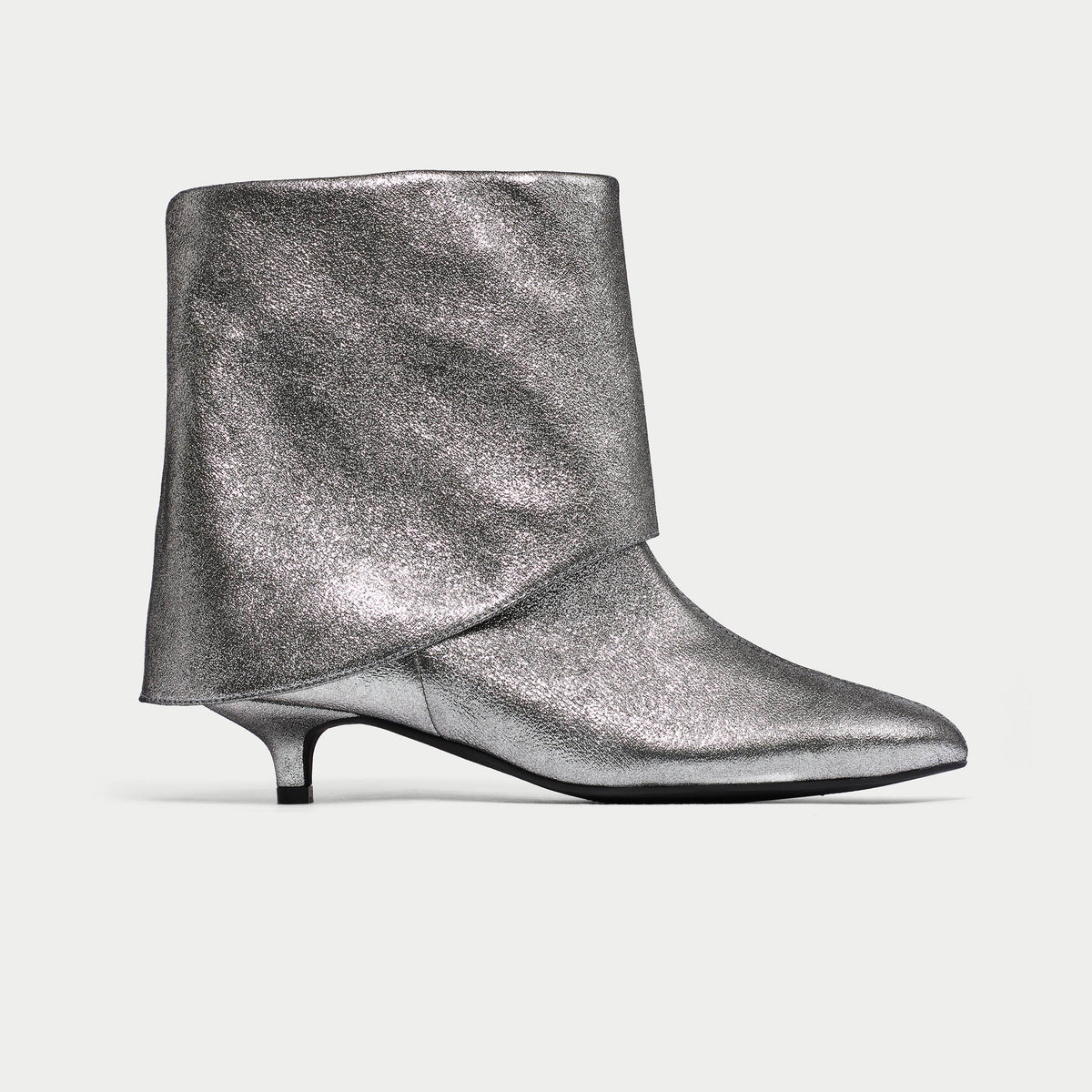
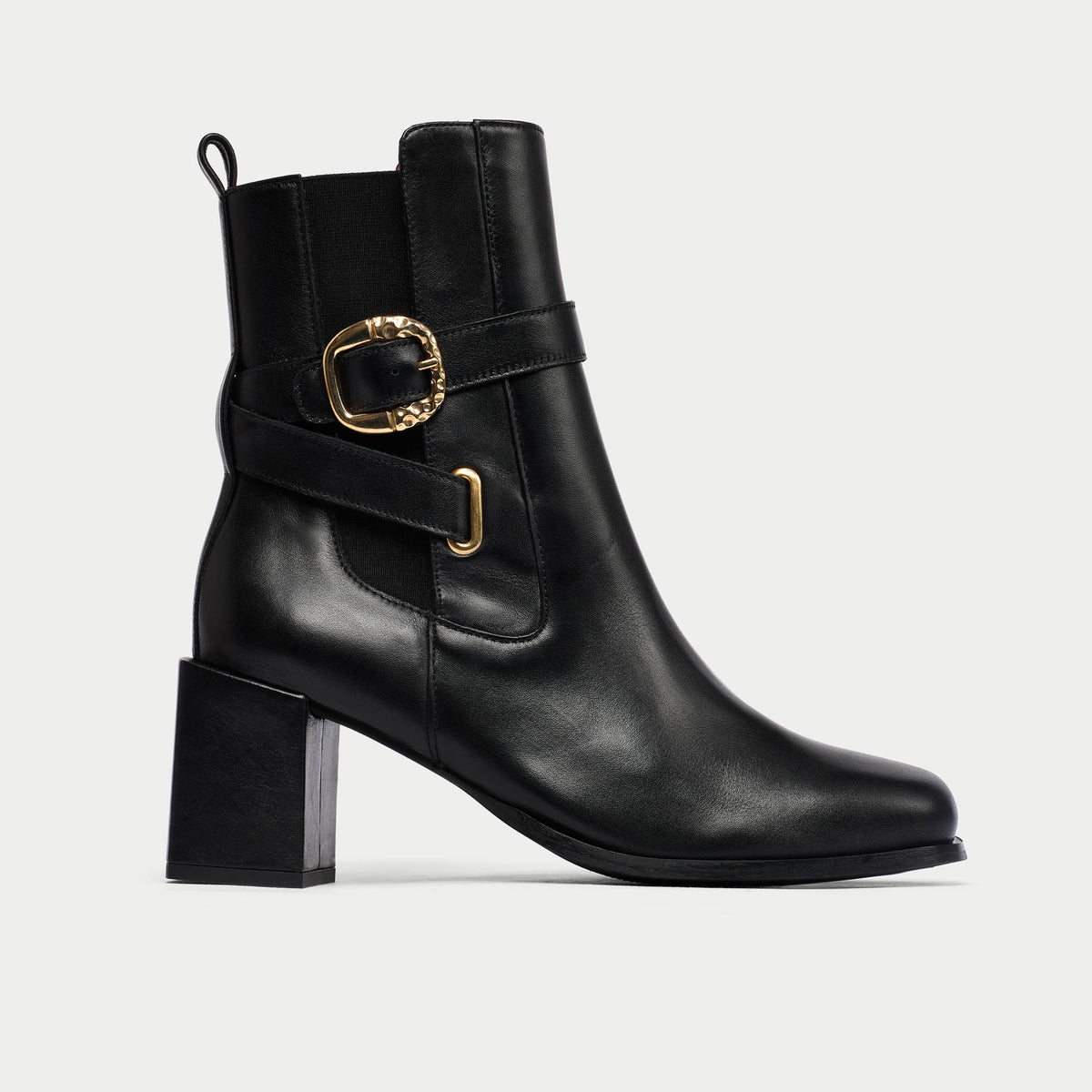
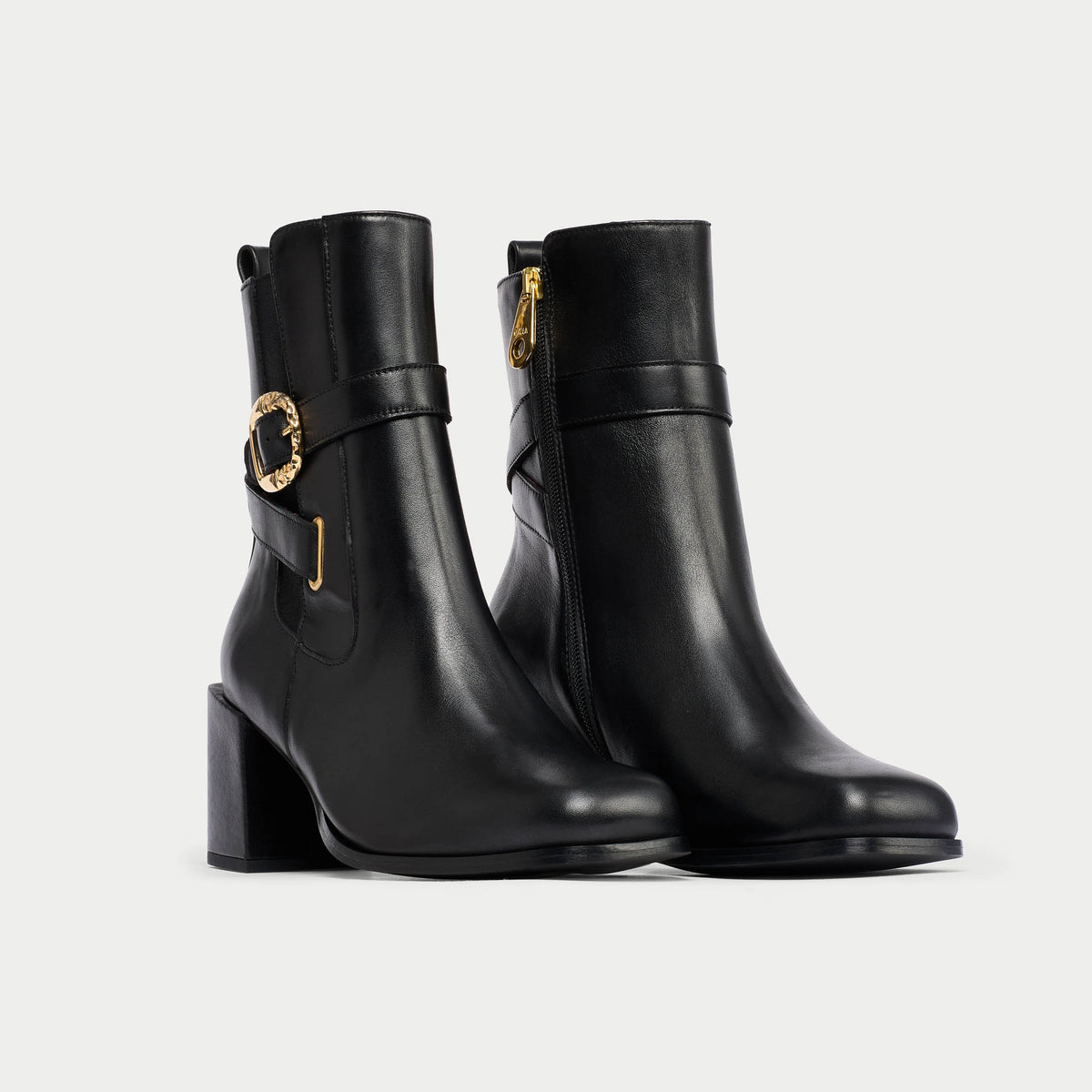
Boots with a low heel, a wide toe box and an inside zip offer support and warmth through the colder months. A hidden stretch panel over the bunion area means the boot accommodates sensitive joints without pressing on them. Buttery-soft leather uppers will mold to your foot over time, with no painful break-in needed.
Sandals are harder to get right because there is less shoe to work with, but carefully positioned straps that cover the bunion, a cushioned footbed with arch support, and a stable sole make it possible. Choose styles with an adjustable fastening so you can open the shoe up if your feet swell in the heat.
Low block heels are worth considering for occasions when you want a bit of height. A thicker heel reduces pressure on the toes and adds stability. A platform under the ball of the foot reduces the pitch, so the foot doesn't tip as far forward. Keep the heel to 2 inches or under for longer wear, and give thin, narrow heels a miss entirely.
For high-impact sport or running, a dedicated running sneaker with specialist cushioning and motion control is the right tool. Our sneakers are designed for walking, standing and everyday activity rather than high-impact exercise.
Our own styles bring these features together, from cushioned flats to sneakers and boots.
How to get the right fit
Measure both feet (they're rarely the same size), and fit the shoe to the larger one.
Always try shoes later in the day, when your feet have swollen to their fullest.
There should be roughly a thumb's width of space between your longest toe and the end of the shoe.
Width matters just as much as length. A 2018 review by Buldt and Menz found that between 63 and 72% of people were wearing shoes that did not accommodate either the width or the length of their feet, and that 50% of women wore shoes too narrow, compared with 34% of men.
Bunions need width, not length, and if you've been sizing up to get more room, you'll know the problem: shoes that are too long, a foot that slides forward, toes that jam into the front, and you're back where you started. What you need is a shoe with extra width and depth across the forefoot and a standard, secure fit around the heel, so the shoe holds your foot in place while still giving the toe box the room it needs.
A good shoe should not need a painful break-in period. Leather will soften and give over time, but if a shoe hurts in the shop, it is unlikely to feel better in a week. If you're unsure of your measurements, our guide explains how to measure your feet at home, including width, so you know exactly what size and fitting to look for.
Footwear habits that make foot pain worse
Thin soles, narrow toes, high heels, worn-out shoes and fitting shoes in the morning, when feet are at their smallest, all work against you, even if the shoes started out right.
Thin, flat, unsupportive soles offer no shock absorption and no arch support. Every step lands on the heel and the ball of the foot with nothing in between. This includes most fashion pumps and unsupported flip-flops.
High heels and pointed toes push weight onto the forefoot, crowd the toes together and put pressure directly onto bunions and the joints behind the toes. Poorly fitting footwear can aggravate bunions, though it is not the sole cause.
A pointed silhouette does not have to mean a compressed forefoot. In our pointed styles, the shoe is wide across the bunion and the toes sit well before the point starts, so the narrow tip never presses on your toes.
Worn-out shoes that have lost their cushioning and sole structure no longer absorb shock or support your foot. If the heel is worn down unevenly or the insole has gone flat, the shoe is no longer doing the job it was built for. Rotating between two or three pairs gives each shoe time to recover its shape between wears.
Going barefoot on hard floors at home strips away every layer of support. If your feet are painful, a supportive slipper or house shoe makes a surprising difference.
Forcing a painful break-in usually means the shoe is the wrong shape for your foot, not that it needs wearing in. A shoe made with soft, high-quality leather should feel comfortable from the first wear.
Buying shoes in the morning when your feet are at their smallest means they may be too tight by mid-afternoon. Always fit shoes later in the day.
When to see a podiatrist
Shoes manage the symptoms, but a podiatrist diagnoses the cause, and there are times when better footwear is not enough on its own.
the pain is sharp, sudden or getting noticeably worse;
you're experiencing numbness or tingling;
a bunion or other deformity seems to be spreading; or
you have diabetes or circulation problems that affect your feet.
These are signs that something needs professional assessment.
A podiatrist can work out what's driving the pain, assess how your foot moves, prescribe orthoses (custom insoles) if needed, and refer you to a specialist if the problem goes beyond conservative management. Please remember that the advice in this article is general, and if you are experiencing foot pain you need to see your podiatrist.
FAQs
What shoes do podiatrists recommend for women?
Podiatrists recommend shoes with firm arch support, good cushioning, a stable sole, enough room in the toe box for your toes to sit flat, and a low, stable heel. The best specific choice depends on what's causing the pain, which is why the advice usually starts with an assessment rather than a particular brand or style.
Are flat shoes bad for painful feet?
Completely flat, unsupportive shoes can make pain worse, particularly heel pain and plantar fasciitis, because they offer no arch support and no shock absorption. But a supportive flat with a hidden heel lift, arch support and a roomy toe box is one of the best everyday choices for painful feet. The word "flat" doesn't have to mean "unsupported."
Do shoes for painful feet have to look 'orthopedic'?
No. Arch support, cushioning, a wide toe box and a stable sole all fit inside shoes that look like ordinary sneakers, flats, loafers and boots. Nobody needs to know the shoe was chosen for how it feels rather than how it looks.
Our sneakers, for one, look like fashion sneakers, not medical shoes, and the bunion is hidden rather than advertised. When HCPC-registered podiatrist Dina Gohil reviewed our shoes, she concluded that they 'don't look hideous', something she found refreshing because patients routinely refuse recommended footwear purely on how it looks.
Can the right shoes cure painful feet?
No. Shoes reduce pressure and support the foot, but they do not cure the underlying cause. This is particularly true of bunions: no shoe can cure, reverse or straighten a bunion. Only surgery can correct the deformity. What a good shoe does is accommodate the joint, reduce pressure on it, and make day-to-day life significantly more comfortable.
Can a podiatrist help with shoes for painful feet?
A podiatrist can assess your feet and, for some conditions, may advise on or provide footwear or orthotic insoles. In practice, most people buy their own comfort footwear, looking for the features described above. If you're struggling with foot pain and haven't seen a podiatrist, booking an appointment with one is a good starting point.




Leave a comment
This site is protected by hCaptcha and the hCaptcha Privacy Policy and Terms of Service apply.